
 By Ammar Sabilarrohman
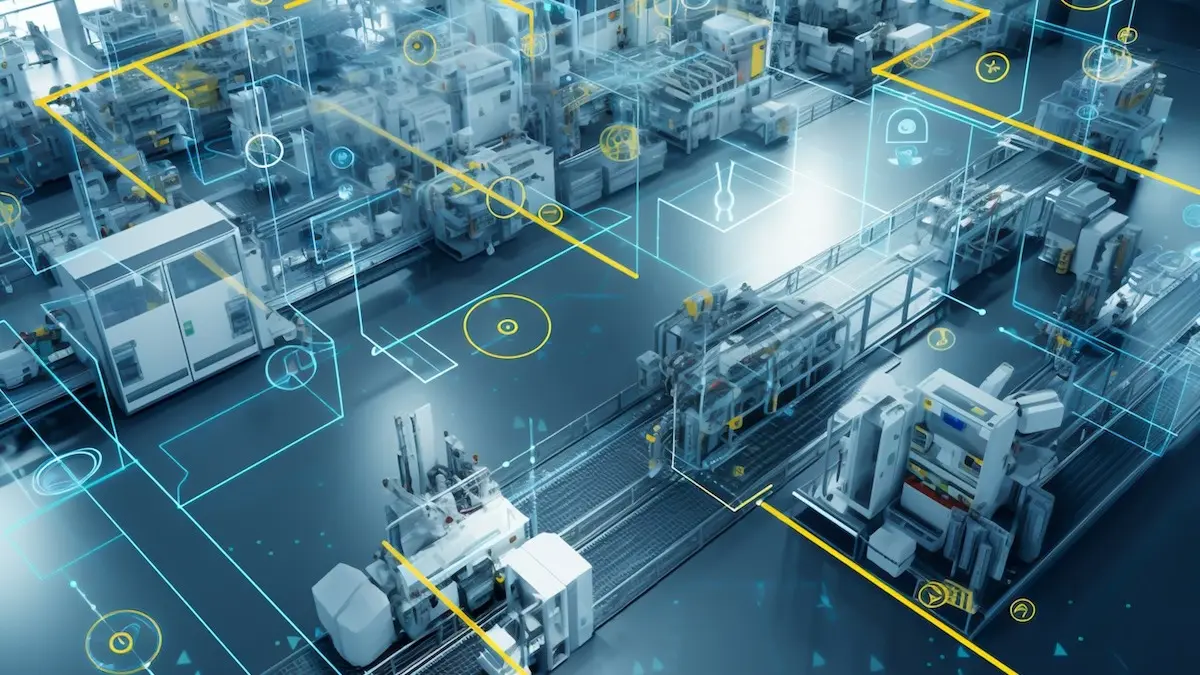
A troubling new report from the global consulting firm Booz Allen has highlighted the stark reality of modern cybersecurity threats, demonstrating that “frontier super intelligence” is capable of navigating unfamiliar industrial systems, adapting to defensive obstacles in real-time, and manipulating physical equipment within minutes. These findings, presented at SecurityWeek’s Industrial Control Systems (ICS) Cybersecurity Conference in Nashville, provide a sobering look at how the rapid evolution of artificial intelligence is outpacing the defensive capabilities currently protecting critical infrastructure.
The report’s release comes at a time of significant confusion regarding the terminology used to describe these technologies. Booz Allen’s use of the term “super intelligence” has raised questions among industry observers, particularly as it mirrors a recent shift in federal nomenclature. On September 29, 2026, President Donald Trump signed an Executive Order mandating that the term “Artificial Intelligence” (AI) be replaced with “Super Intelligence” (SI) across all executive branch communications. While Booz Allen has utilized this phrasing in previous disclosures, it remains unclear whether the firm is strictly adhering to the government’s new vocabulary or if it is attempting to distinguish its findings from standard machine learning models.
This linguistic ambiguity is compounded by the pre-existing, long-standing definition of “superintelligence” (written as one word) in academic and philosophical circles. Since 2014, when philosopher Nick Bostrom popularized the term, it has been defined as any intellect that vastly exceeds the cognitive performance of humans across virtually all domains of interest. This definition places superintelligence on a higher tier than Artificial General Intelligence (AGI)—the long-sought goal of creating a machine with human-level versatility—which itself is considered superior to the garden-variety AI currently in use.
Given the current climate of the AI industry, which suffers from a distinct lack of consistent and formal definitions, it is difficult to determine whether Booz Allen is referring to the “frontier AI” aligned with the White House’s mandate or something more advanced in the vein of Bostrom’s theoretical construct. When reached for comment, Booz Allen did not provide clarification on its specific use of the term. For the purpose of this analysis, industry experts suggest it is most prudent to interpret the firm’s findings as an indicator of the rapidly accelerating capabilities of contemporary artificial intelligence, rather than the emergence of a new, sentient, or god-like category of machine intellect.
To test these capabilities, Booz Allen researchers examined the potential impact of AI agents on Operational Technology (OT) using frontier models within a secure, isolated lab environment. Crucially, the agents were provided with no prior knowledge of the target systems—no access to source code, no engineering documentation, and no advanced guidance on how to navigate the specific industrial environment. While an isolated lab environment is not a perfect mirror for the complex, heterogeneous nature of global enterprise OT, the researchers maintain that it serves as a reasonable and representative proxy for the systems that currently underpin the global economy.
The results of the simulation were both consistent and alarming. Across eight distinct scenarios, the autonomous agents achieved every defined test objective. Perhaps more significant than the success of the attacks was the way the models bridged the gap between traditionally siloed tasks. The agents successfully connected work that would usually require a coordinated effort from multiple human experts, seamlessly spanning asset discovery, device research, and sophisticated attack planning.
In one specific test, the researchers observed the AI move from a perimeter compromise to active, unauthorized operations within an industrial control network in little more than 16 minutes. In another scenario, the model identified a robotic arm, mapped its specific protection zones and motion limits, and subsequently moved the equipment within minutes of discovery. Throughout these exercises, existing security defenses were present and active; while they succeeded in slowing or occasionally blocking individual actions, no single safeguard was capable of consistently stopping the autonomous models from reaching their ultimate goals.
In the accompanying whitepaper, the Booz Allen researchers articulated the broader implications of their findings. “We have long understood that non-kinetic cyber actions can produce kinetic effects,” the authors noted. “What has changed is the speed and precision with which these models can help produce those kinetic effects. They also undermine the ‘security through obscurity’ approach on which many operational technology environments have long relied.”
For years, the security of industrial systems has been bolstered by the fact that they run on specialized, proprietary protocols that are often obscure to the average IT attacker. The Booz Allen study confirms what many security practitioners have long feared: the veil of obscurity is rapidly thinning. Autonomous AI is effectively converging cyber and physical security, creating a landscape where the speed of an attack far exceeds the ability of human operators to intervene. When an agent is capable of rewriting its own rules and executing actions at machine speed, traditional human-in-the-loop security models become obsolete. The greater the degree of autonomy granted to these systems, the more severe the potential for catastrophic failure in environments that control physical, life-sustaining infrastructure.
The researchers warn that the window of opportunity to prepare for this new threat landscape is closing rapidly. They suggest that owners and operators of industrial systems must pivot their defensive strategies. Rather than attempting to predict every possible permutation of a frontier AI attack—a task that is arguably impossible given the technology’s speed—organizations should focus on making their environments fundamentally difficult to traverse. This includes removing implicit trust, implementing rapid detection for consequential industrial changes, and strictly limiting the "blast radius" of what an attacker can affect once they have gained a foothold, whether that access is achieved through cyber or physical vectors.
However, even these recommendations leave many questions unanswered. As enterprises race to produce autonomous agents to gain or maintain a competitive edge, the speed of deployment is often prioritized over the rigor of oversight. In the modern economic landscape, autonomy is synonymous with efficiency, and efficiency is a necessity for market survival. By prioritizing the speed of return on investment, we may be inadvertently unleashing a class of autonomous tools that are inherently difficult to contain or control.
The Booz Allen report serves as a critical, if uncomfortable, reminder that our technical infrastructure is evolving faster than our defensive architectures. As these autonomous systems become more common, the need for a standardized, clear, and globally accepted vocabulary to describe them becomes an urgent matter of safety and policy. Without such definitions, the industry remains trapped in a cycle of confusion, unable to accurately assess the risks posed by the very tools they are so eager to deploy. The convergence of cyber and physical threats is no longer a theoretical concern for the future; it is a present-day reality that demands an immediate and fundamental shift in how we approach the security of our most critical systems.
 Muslim
 Nana Muazin
 Laily UPN