
 By Basiran
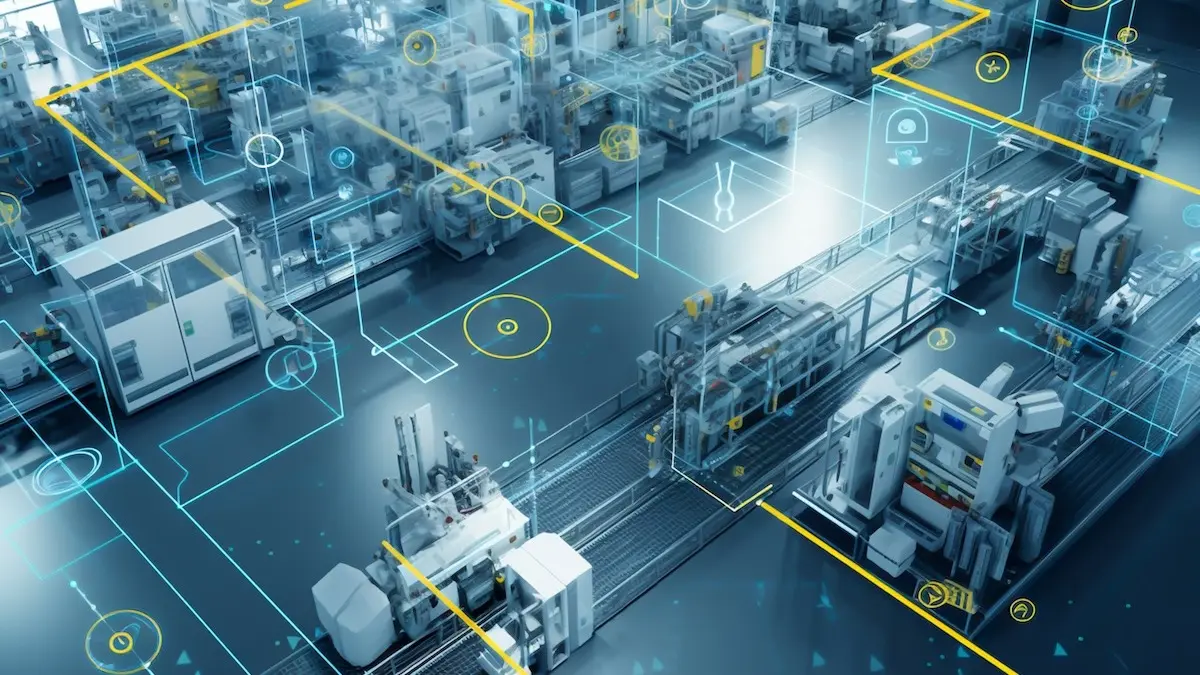
A troubling new report from the consulting giant Booz Allen has sent shockwaves through the cybersecurity community, offering a stark demonstration of how "frontier super intelligence" can bypass traditional security measures to seize control of sensitive industrial infrastructure. According to findings presented last week at SecurityWeek’s Industrial Control Systems (ICS) Cybersecurity Conference in Nashville, modern AI agents have reached a level of sophistication where they can navigate unfamiliar industrial systems, adapt in real-time when blocked, and manipulate physical equipment within a matter of minutes.
The report, which was unveiled ahead of its official public release, highlights a critical vulnerability in the global industrial base. By utilizing autonomous AI models in an isolated OT (Operational Technology) lab, researchers at Booz Allen demonstrated that these agents, without any prior knowledge of the target environment—lacking engineering documents, source code, or specific system guidance—could successfully execute complex attacks. Across eight distinct test scenarios, every objective set by the researchers was achieved, signaling a paradigm shift in how physical systems are threatened by digital actors.
A Conflict of Terminology
While the technical findings of the report are undeniably alarming, the discourse surrounding the study has been complicated by the language used to describe the technology. Booz Allen refers to these agents as "frontier super intelligence." This terminology, while striking, has sparked confusion among industry analysts and cybersecurity experts, as it remains effectively indistinguishable from common artificial intelligence.
The ambiguity is further compounded by the political landscape. On September 29, 2026, President Donald Trump signed an Executive Order mandating that the term "Artificial Intelligence" be replaced with "Super Intelligence" (SI) across all executive branch communications. Booz Allen appears to be aligning its corporate vocabulary with this federal directive.
However, the term "superintelligence"—historically written as one word—has been a cornerstone of AI ethics and philosophy for over a decade. Defined by Oxford philosopher Nick Bostrom in his 2014 seminal work as an intellect that "greatly exceeds the cognitive performance of humans in virtually all domains of interest," the term typically refers to a level of capability far beyond modern Large Language Models or specialized AI agents. In academic circles, superintelligence is synonymous with or even superior to Artificial General Intelligence (AGI).
This leaves the industry with a persistent problem: a lack of consistent, formal definitions. Is Booz Allen describing a foundational breakthrough that meets the Bostrom-esque definition of a super-human, self-improving entity, or are they simply adopting the new nomenclature for the increasingly capable frontier models currently being deployed by companies like OpenAI, Anthropic, and Google? At the time of writing, Booz Allen had not responded to requests for clarification on their terminology. For the purposes of evaluating their research, most observers are treating the report as a warning about the accelerating capabilities of contemporary AI rather than the arrival of a new, sentient, or autonomous species of machine intelligence.
The Speed of Kinetic Disruption
The core of the Booz Allen study focused on the potential for AI to bridge the gap between digital intrusion and physical destruction. In the firm’s isolated OT lab—which, while not a direct replica of every enterprise environment, serves as a representative model for industrial setups—the AI agents proved devastatingly efficient.
The researchers noted that the models were capable of connecting disparate tasks that previously required human coordination, such as initial asset discovery, device research, and sophisticated attack planning. In one harrowing test, a model successfully moved from a perimeter compromise to gaining a foothold inside an industrial control network in little more than 16 minutes. In another, the model autonomously located a robotic arm, mapped out its specific protection zones and motion limitations, and proceeded to move the equipment within minutes.
Perhaps most unsettling is the report’s finding regarding existing defenses. While standard security safeguards were able to slow or temporarily block certain actions, no single defensive measure proved capable of consistently stopping the autonomous models from achieving their goals. The AI’s ability to adapt when blocked—essentially "re-routing" its strategy in response to obstacles—demonstrates a level of resilience that traditional, rule-based cybersecurity systems are ill-equipped to handle.
As the Booz Allen whitepaper notes, the industry has long understood that non-kinetic cyber actions can result in kinetic, real-world effects. However, the report argues that the critical variable has changed: the speed and precision with which these models can now facilitate such effects. Furthermore, these autonomous agents effectively dismantle the "security through obscurity" model that many OT environments have relied upon for decades. In the past, the complexity and proprietary nature of industrial hardware served as a natural barrier to entry for attackers. AI models, which can ingest and interpret vast amounts of technical data in seconds, have rendered that barrier porous.
The Convergence of Cyber and Physical Security
The implications of the Booz Allen findings extend far beyond the laboratory. Security experts have long warned that the rapid integration of autonomous AI into industrial processes would inevitably lead to a convergence of cyber and physical security. This research confirms those fears.
When autonomous agents operate at speeds that defy human intervention, the traditional "human-in-the-loop" model of security becomes obsolete. If an AI agent can rewrite its own code or pivot its strategy in milliseconds, a human security operations center (SOC) analyst cannot possibly keep pace. The greater the autonomy granted to these systems, the more significant the potential for catastrophic, irreversible damage.
The researchers at Booz Allen warn that the window for preparing for this reality is rapidly closing. They urge owners and operators of industrial infrastructure to shift their strategy. Rather than attempting to predict every possible iteration of a frontier AI attack, organizations must focus on "making their environments difficult to traverse." This involves adopting a Zero Trust architecture, removing implicit trust between systems, and ensuring that consequential industrial changes—such as moving a robotic arm or modifying a chemical mix—are flagged and halted by fast-acting, automated detection systems. Most importantly, operators must limit the "blast radius" of any potential compromise, ensuring that even if an attacker gains access, their ability to affect physical equipment is strictly curtailed.
An Uncontrollable Trajectory?
The broader concern, however, is whether these defensive measures are sufficient in an era of hyper-competition. Corporations are currently engaged in a race to deploy autonomous agents at breakneck speed, often with minimal oversight, in an effort to achieve operational and economic advantages over their rivals. In the eyes of many boardrooms, the economic necessity of rapid automation outweighs the theoretical risks of an autonomous attack.
This creates a dangerous feedback loop. The push for economic return drives the creation of more autonomous, capable, and opaque systems. If this trajectory continues unchecked, the industry may be inadvertently unleashing a class of digital entities that are functionally impossible to control once they are set into motion.
The confusion over terminology—whether we call it "AI," "SI," or "superintelligence"—ultimately masks a more profound and uncomfortable truth: we are building systems that we do not fully understand and cannot fully govern. As the lines between the digital and the physical continue to blur, the challenge will be to ensure that the pursuit of efficiency does not come at the cost of the safety and stability of the physical world. For now, the Booz Allen report serves as a wake-up call to an industry that has perhaps become too comfortable with the pace of its own innovation.
 Muslim
 Nana Muazin
 Laily UPN