
 By Ali Ikhwan
In the wake of the failed CLARITY cloture vote in the United States Senate, federal financial watchdogs have swiftly moved to fill the legislative vacuum. Both the Securities and Exchange Commission (SEC) and the Commodity Futures Trading Commission (CFTC) have immediately stepped up to issue their own independent regulatory frameworks for the digital asset markets, bypassing stalled congressional efforts to establish comprehensive statutory guidelines.
The regulatory shift materialized rapidly. Just two days after the Senate vote failed to advance the CLARITY legislation, the SEC unveiled a significant five-year exemption framework. This temporary policy permits the issuing and trading of stock tokens within regulated environments. The move has already catalyzed corporate action across the financial sector. OXK has quickly teamed up with Intercontinental Exchange (ICE) to launch trading operations encompassing 63 New York Stock Exchange-listed stocks. Simultaneously, Securitize launched 12 dedicated Securitize Stocks, bringing major traditional equities including Apple, Nvidia, and Microsoft onto on-chain infrastructure.
Beyond stock tokenization, the SEC has broadened its policy initiatives by issuing clarifying guidance aimed at resolving long-standing ambiguities. The agency formally clarified that a crypto token does not automatically transform into a security merely because a project engages in the practice of buying back its own tokens. Additionally, the commission explicitly stated that liquid staking tokens do not qualify as securities under current interpretations. To safeguard market infrastructure, the SEC has also proposed an entirely new set of rules governing the custody of digital assets.
Meanwhile, the CFTC has mirrored these aggressive regulatory adjustments. The commission moved to exempt specific crypto software providers from stringent registration requirements. Furthermore, the agency has proposed a brand-new "crypto asset market" registration category, signaling its intention to eventually allow fully registered exchanges to offer leveraged trading options to participants.
Despite these proactive regulatory measures, a deep-seated concern persists among industry participants and financial analysts: these newly minted rules could be built on shifting sands. Prominent financial institutions, including TD Cowen, have cautioned that agency rules represent the most vulnerable form of regulation because they are the easiest for future administrations to rescind. This administrative volatility was vividly demonstrated when newly appointed commissioners under the current administration systematically wiped away policies and enforcement approaches from the Gary Gensler era.
Compounding this administrative fragility is a landmark 2024 Supreme Court decision that has fundamentally altered the legal landscape, making it significantly easier for federal courts to overturn agency rulemaking. The durability of regulatory rulemaking is already facing direct tests in the judicial system. Notably, a community bank group has filed a lawsuit against the Office of the Comptroller of the Currency, arguing that the agency exceeded its statutory authority by permitting crypto firms to obtain national trust bank charters.
To explore the intricate legal issues surrounding agency rulemaking, judicial shifts, and the future of crypto regulation, legal expert Yuriy Brisov from D&A Partners sat down for an interview to dissect what these developments mean for the market.
SEC Rulemaking Authority and Legislative Intent
Addressing the fundamental question of whether regulatory agencies are legally supposed to create rules or merely interpret existing statutes, Brisov explained the historical mechanism underpinning the SEC’s existence.
"They are supposed to create rules. They have this power under the Exchange Act of 1934," Brisov said. "The SEC was created as a result of the major meltdown in the US markets in the end of the 1920s. From the moment of creation, the SEC had the power to create rules and regulations on how the laws should apply. American legislation works by creating general rules, like a frame, and then it has a watchdog watching over these regulations."
Brisov noted that this structural design was intentional. Lawmakers built the system so that when unprecedented technological shifts—such as blockchain tokens—eventually arrived, American legislation would possess the structural flexibility to accommodate them. Emphasizing that rule creation is well within the Commission’s statutory mandate, Brisov observed that this is a function the agency has performed for decades.
The Power to Reverse Prior Administration Policies
When asked whether a newly appointed Commission can interpret regulations in the exact opposite direction of its predecessor, Brisov clarified that such reversals must adhere to established legal boundaries.
"There should be a reason for that. They can, in theory, do that, but it should be all within the formation of the body of law," Brisov explained.
He pointed to the previous administration under Gary Gensler, noting that the Commission attempted to apply existing securities rules directly to blockchain tokens. Because regulatory vagueness persisted, many companies ultimately chose to abandon the US market entirely. This marketplace flight provided an opening for the new Commission to step in, reassess the situation, and offer alternative rules.
However, Brisov emphasized that agency rulemaking power is not absolute. If regulators introduce provisions that impose unbearable economic burdens on enterprises or introduce bizarre legal interpretations, existing laws protect companies and damaged parties. Such entities retain the legal right to challenge regulations in court, arguing that the SEC’s actions are damaging the marketplace.
As a historical precedent, Brisov recalled a 2011 legal battle in Business Roundtable vs. SEC, where the business community successfully challenged new SEC proxy voting rules, arguing they were bizarre, highly burdensome, and economically detrimental.
The Post-Chevron Legal Landscape
The conversation also turned to the Supreme Court’s monumental 2024 ruling in Loper Bright, which overturned the 40-year-old Chevron deference doctrine. Under the historical Chevron precedent established in 1984, federal courts deferred to an agency’s interpretation whenever statutory language was ambiguous or vague.
"In June 2024, Loper Bright was a new precedent that overruled Chevron. It’s now saying that we don’t have to," Brisov explained. While acknowledging that the SEC remains a powerful authority with deep expertise in securities law, he noted that courts are now expected to use their own judgment and apply foundational legal frameworks, such as the Howey test, independently.
When asked if this makes it more likely for SEC rules to be overturned by the judiciary, Brisov affirmed that courts may indeed arrive at different conclusions. However, he stressed that legal challenges cannot be mounted simply because a market participant dislikes a regulation.
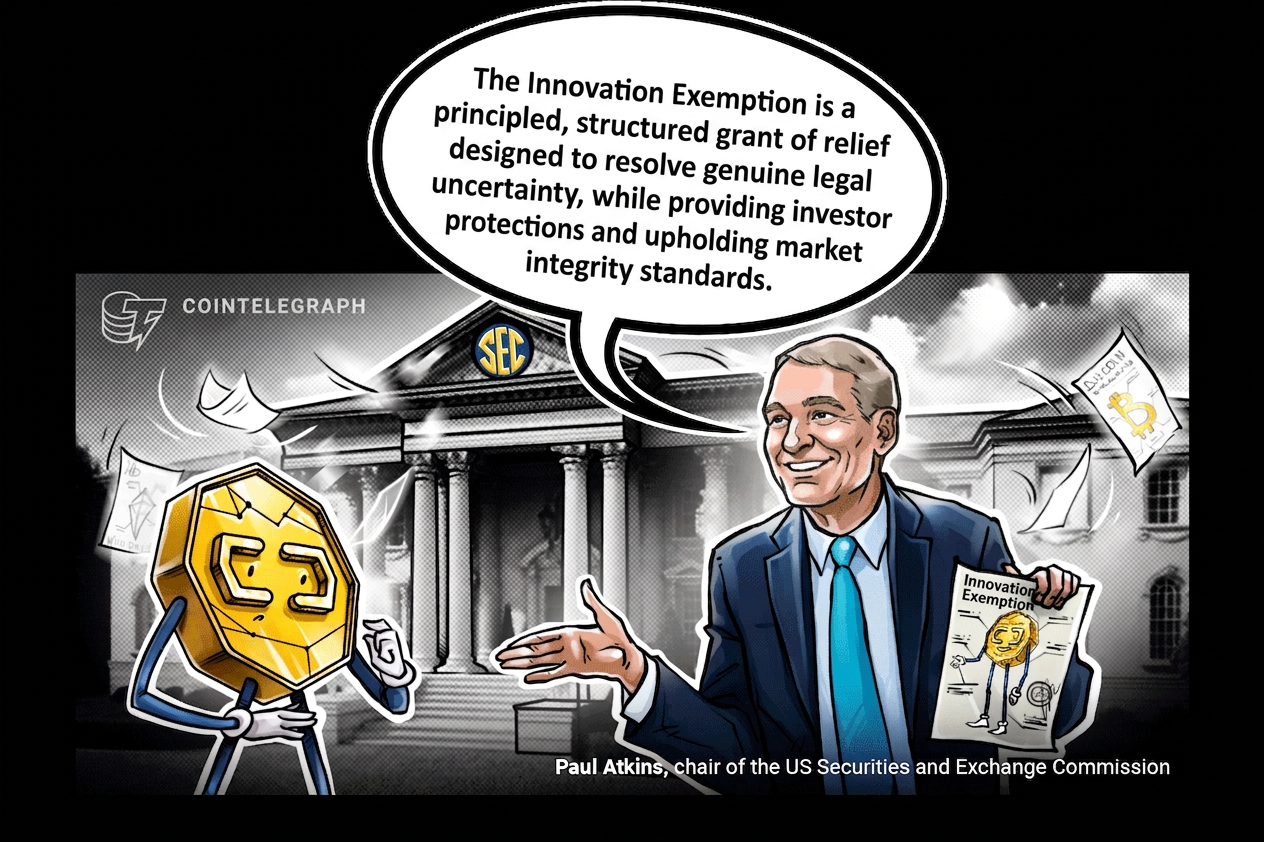
Traditional broker-dealers and market participants suffering under a new regulation must successfully prove that regulators failed to conduct adequate research, that the rules impose an unjustified business burden, and that the framework harms the broader US market. Pointing to current efforts, Brisov noted that SEC Chair Paul Atkins and his staff have actively consulted with numerous crypto firms and venture capital funds, indicating that substantial research and preparation preceded the new rules.
Corporate Reliance and the Stability of Agency Interpretations
Addressing the long-term outlook, Brisov considered a scenario where businesses invest heavily in tokenized stock infrastructure over the next two years, only for a future SEC administration to attempt a unilateral reversal of the current rules.
"They have to take them into account. If there is the potential for the US market to grow and to benefit from this regulation, they won’t be able to just overrule it," Brisov stated.
He explained that both regulatory agencies and courts must follow a transparent legal and economic thought process, often referred to by the acronym IRAC: issue, rule, analysis, and conclusion. Regulators cannot simply declare that they dislike a policy; they must provide robust economic data, comprehensive research, and clear proof that prior assessments were insufficient before arriving at a contradictory conclusion.
Brisov used the Howey test as an example, noting that even if an official privately disagreed with the decades-old standard, statutory reality prevents them from arbitrarily discarding it. Every official regulatory release continues to affirm that Howey remains valid law in the United States, with agencies simply applying transparent, context-specific legal logic to different scenarios.
The Legal Status of Regulatory FAQs
The discussion concluded by examining the practical weight of informal regulatory guidance, such as the SEC’s recently issued FAQ clarifying that crypto token buyback schemes do not automatically convert commodity tokens into securities. When asked if a company could safely launch a buyback program based solely on an FAQ, Brisov urged caution.
"If you follow it, and it’s created by the people who know what they’re saying, probably you will be in the clear. But it’s not legislation. An FAQ is just like a manual. It doesn’t have any authority, even for the staff," Brisov explained, emphasizing that such documents merely serve as explanatory staff notes rather than binding legal rules.
Highlighting the fluidity of these guidance documents, Brisov noted instances where agencies have rapidly rewritten FAQs following critical legal feedback from industry counsel. Because these documents do not constitute formal regulation or legislation, agencies retain the flexibility to revise them frequently as the digital asset landscape continues to evolve.
 Sagoh
 Basiran
 Nana Wu