
 By Asep Darmawan
The United Kingdom has officially issued sweeping economic sanctions against Cryptomus, a chameleonic cryptocurrency platform that cybercrime investigators and blockchain intelligence firms identify as a primary conduit for illicit payments. According to security experts, the platform facilitates ransomware payouts, narcotics distribution, darknet market transactions, financial fraud, and cybercrime services that actively help the Russian government and its financial institutions circumvent international financial restrictions and economic sanctions.
On October 8, the U.K. government enacted formal sanctions targeting Cryptomus—which has previously operated under the corporate names Certa Payments and Xeltox Enterprises—for processing high-volume financial transactions that directly benefit Russian state interests and aligned financial entities. The newly introduced sanctions freeze any assets held by Cryptomus within British banking institutions and strictly prohibit U.K.-based companies and individuals from conducting any form of business with the platform, whether virtual or otherwise. Alongside Cryptomus, the U.K. government also clamped down on several other virtual payment platforms, specifically targeting VexPay, TokenSpot, and the Tsunami Payments service.
The crackdown follows extensive investigations into the darker corners of the digital asset ecosystem. As highlighted in a December 2024 investigative report detailing how cryptocurrency successfully converts to cash inside Russian banks, Cryptomus has long functioned as a critical payment processor for dozens of underground Russian cryptocurrency exchanges and dubious websites peddling cybercrime infrastructure. Since emerging into the digital landscape in 2022, the company has engaged in a deliberate shell game of corporate identity changes. Most recently, following a massive regulatory penalty levied by Canadian authorities, the enterprise launched a parallel platform operating under the name "Heleket."
Industry stakeholders have emphasized the systemic scope of the operation. Prominent blockchain data-crunching firm Chainalysis noted in an official blog post that the U.K. sanctions are designed to dismantle the broader digital infrastructure underpinning Russia’s wartime economy. According to Chainalysis, Cryptomus and its alter-ego Heleket rapidly evolved into dominant payment hubs for illicit financial activity. Data compiled by the firm reveals that these interconnected services received a greater volume of illicit funds across tracked categories than the traditional cryptocurrency mixers present in their dataset. Furthermore, the number of illicit counterparties utilizing the network surged dramatically, crossing the threshold of more than 900 unique illicit entities in a single month during late 2025.

Independent blockchain intelligence paints a similarly staggering picture of the platform’s overall financial throughput. In April 2026, blockchain analysis firm TRM Labs published findings indicating that Cryptomus had processed more than $7 billion in cumulative transactions since its inception in 2022. This massive volume included transactions tied to severe criminal enterprises, such as vendors distributing child sexual abuse material, international terrorist financing networks, and human trafficking operations.
TRM Labs observed that while Cryptomus experienced a noticeable dip in transaction volume after briefly instituting formal "know your customer" (KYC) rules, the platform actively sought to evade regulatory oversight. When faced with severe penalties in Canada, the platform sidestepped compliance by spinning up Heleket as a parallel operational entity that continued to provide frictionless, no-KYC payment processing services to its criminal clientele.
Richard Sanders, an experienced blockchain analyst and investigator who spent months meticulously mapping out the complex payment infrastructure of Cryptomus and directly transacting with its user base, pointed out a vital distinction regarding the latest U.K. action. Sanders noted that the U.K. sanctions carry real operational weight because Canada’s previous financial penalties against the platform ultimately proved unenforceable and uncollectible.
Writing on professional networking platforms, Sanders emphasized that while regulatory fines rarely deter a determined underground cryptocurrency payment processor from continuing to move funds, comprehensive government sanctions effectively kill the underlying operational capability. Following an initial CAD $176 million fine issued by Canada for egregious anti-money laundering violations, Cryptomus formally appealed the penalty, launched Heleket as an operational workaround, and simply continued processing massive volumes of suspicious transactions unabated.
Furthermore, Sanders highlighted the unprecedented diplomatic and geopolitical nature of the U.K. action, noting that it represents the first known instance of a "Five Eyes" intelligence-sharing nation—comprising Australia, Canada, New Zealand, the United Kingdom, and the United States—imposing direct economic sanctions against a cryptocurrency operation incorporated within the jurisdiction of another Five Eyes partner.

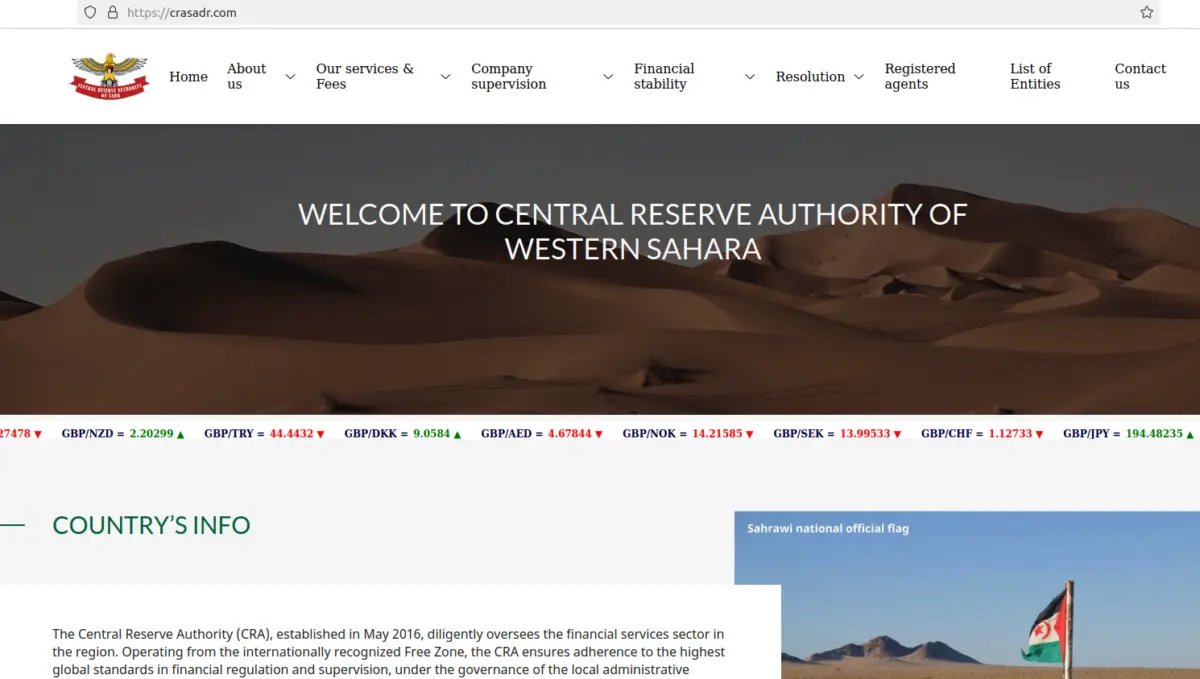
A persistent question surrounding shadowy operations like Cryptomus and Heleket involves the legitimate source of their authority to offer international financial services. Investigators tracking the corporate genealogy of these platforms discovered a convoluted paper trail pointing toward fake financial institutions supervised by a phony regulatory body positioned within a disputed territory in northwest Africa that lacks widespread international recognition as a sovereign nation.
Investigations into the corporate architecture revealed that the sole shareholder of Certa Payments—the original parent company of Cryptomus—was a 25-year-old Ukrainian woman who simultaneously served as the head of several other corporate entities. Among these was the WS Management and Advisory Corporation, an organization that aggressively marketed itself as an exclusive regulatory body responsible for overseeing and issuing licenses for cryptocurrency ventures, foreign exchange brokerages, and online gaming businesses incorporated within the disputed region of the Western Sahara.
Digital forensic analysis of the regulatory body’s web presence exposed deep structural links to the crypto platform’s operations. The official website of the supposed regulatory agency, registered as crasadr.com, explicitly claimed to assist applicants with corporate bank setup, formation services, online gaming licenses, and the creation of foreign exchange brokers. Concurrently, one of Certa Payments’ former corporate domains shared a web server with a dozen other domains, including rasd-state.ws, which served as the designated digital portal for the Central Reserve Authority of the Western Sahara. This obscure registry was used to publicly list the various commercial entities that had ostensibly been awarded official licenses to operate global cryptocurrency, gaming, and foreign exchange services.
 Nila Kartika Wati
 Sagoh
 Dwi Wanna