
 By Ali Ikhwan
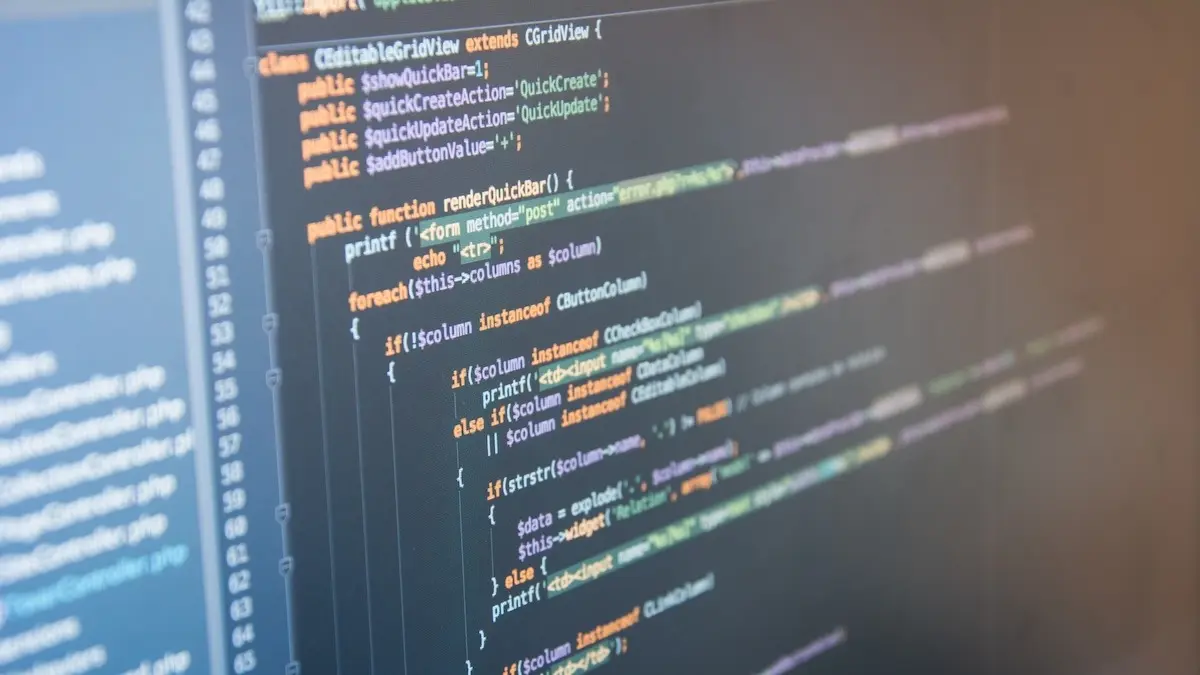
Two days after the PHP development team issued emergency patches to address a pair of critical vulnerabilities collectively dubbed "PHP2Shell," the global cybersecurity landscape remains on high alert. While the patches were released ahead of schedule following a leak of the CVE identifiers, threat actors have already begun integrating the flaws into their arsenals, with evidence suggesting attempts to leverage the bugs to propagate a variant of the notorious Mirai botnet. Despite the urgency and the widespread nature of the threat, security researchers have yet to confirm a single successful, large-scale breach in the wild.
The vulnerabilities, identified as CVE-2026-109618 and CVE-2026-109619, represent a significant threat to web infrastructure. Both flaws are classified as critical, carrying a CVSS v4.0 score of 9.2, and allow for unauthenticated remote code execution (RCE) within the PHP engine. Discovered in August by a collaborative effort involving researchers from Wiz, OpenAI, and Calif, the bugs forced an emergency release on October 21. The patched versions—8.5.12, 8.4.27, 8.3.36, and 8.2.35—were deployed 24 hours earlier than originally intended to mitigate the risks posed by the public disclosure of the vulnerability details.
Precautionary Measures Disrupt Global Services
The potential severity of the PHP2Shell flaws has prompted organizations across the globe to take aggressive, albeit precautionary, measures. In Europe, the impact was felt across various sectors on October 21, as government, educational, and hospital websites were taken offline to facilitate patching. The United Kingdom government reported that 32 of its services were rendered unavailable, with another four operating only partially. These disruptions were largely self-imposed, serving as a defensive posture while system administrators worked to apply the necessary updates to their web-facing infrastructure.
Amazon’s security teams were among the first to sound the alarm, documenting initial exploitation attempts as early as October 17. As news of the patches spread, attack activity surged, leading to a cascade of advisories from security vendors, government agencies, and software providers worldwide, all aimed at providing detection rules and patching guidance to a vulnerable digital ecosystem.
Mirai Botnet Linked to Exploitation Attempts
The race to weaponize the PHP2Shell vulnerabilities has drawn the attention of major threat intelligence firms. Sophos, for instance, reported that threat actors have attempted to utilize the vulnerabilities to install "Potassium," which the firm characterizes as a sophisticated, updated variant of the Mirai botnet. While the specific attack analyzed by Sophos was successfully thwarted before the malware could establish a foothold on the target, the incident highlights the ongoing danger.
The Potassium sample is described as a highly functional iteration of a Mirai-derived strain that first surfaced in early 2026. Its capabilities include the ability to download additional malicious payloads and initiate Distributed Denial of Service (DDoS) attacks. While Sophos initially suggested that a successful exploitation had occurred, its latest analysis corrected this, noting that the malicious code never reached the intended target. Similarly, Arctic Wolf observed connections between Potassium binaries and servers hosting PHP2Shell payloads but found no data confirming that the PHP2Shell requests were successful in fetching or executing the malware.
Meanwhile, Hunt.io has attributed the observed PHP2Shell traffic to an established Mirai-style botnet that has been active since at least May 2026. According to Hunt.io, the operators of this botnet have merely added the PHP2Shell flaws to their existing toolkit as a means of further propagation. Despite these efforts, Sophos and other security researchers believe that attackers are facing significant technical hurdles. The absence of confirmed successful compromises in the wild suggests that crafting a reliable exploit for these specific PHP vulnerabilities is far from trivial, even with the assistance of modern AI-driven development tools.
High Barrier to Entry for Attackers
The narrative of "attempts without breaches" is consistent across the security industry. Firms such as Wordfence have corroborated the reports that while malicious scanning and probing are continuing, no known compromises have resulted from these efforts to date.
Sansec, which had initially predicted that mass exploitation would occur within minutes of the patch disclosure, has significantly revised its outlook. In an update released on October 22, the company noted that successful exploitation requires an attacker to possess granular knowledge of the target server’s specific configuration and environment. Crucially, the exploits currently circulating in the wild appear to fail against standard, default PHP installations, which provide a baseline level of protection against the specific vectors required for these vulnerabilities.
One of the primary challenges for attackers is the presence of address space layout randomization (ASLR), a memory protection feature that randomizes the memory locations of key data areas. This security measure acts as a significant barrier to achieving code execution. However, the threat is not entirely theoretical. The security firm VulnCheck has confirmed that it has successfully developed an exploit for CVE-2026-109618 that can bypass ASLR on x86-64 systems where PHP error display is disabled—a common practice in secure, production-grade environments. VulnCheck has limited access to this exploit, providing it only to its "Initial Access Intelligence" customers. The firm noted that while it is unaware of other public or commercial exploits achieving RCE in production configurations, it expects the level of sophistication among adversaries to grow as they iterate on their methods.
Attacker Tooling and Failed Probing
Further evidence of the difficulty attackers are facing was uncovered by SOCRadar, which analyzed an attacker-controlled server containing custom tooling for the PHP2Shell vulnerabilities. The operator had left their working files publicly browsable, providing researchers a rare glimpse into the development process. The server contained an exploit chain designed for PHP 8.4.26 on Apache mod_php, which the operator touted as a "one-click" solution.
The attacker had integrated companion scripts designed to scan potential targets and verify if they possessed the exact, somewhat rare, server configuration required for the exploit to function. Despite the operator’s apparent skill, the results were underwhelming. They fingerprinted approximately 20 websites across the US, UK, Canada, France, Finland, Poland, and China, conducting deep probes on 11 of them. None of the sites met the exploit’s specific requirements. SOCRadar reported that as of October 22, 2026, there was no evidence of successful shell access on any of the screened targets.
Hunt.io’s analysis of the same attacker infrastructure yielded similar results. After running 10 attack rounds against a list of 123 servers hosted by various cloud providers and ISPs, the attacker failed to achieve a single successful compromise. Out of the 123 targets, approximately 57 were running PHP, and of those, 10 actively rejected the malicious requests, while the remainder proved resistant to the exploit chain.
The Challenge of Patching a Legacy Web
The broader issue remains the sheer scale of the PHP ecosystem and the difficulty of patch management. Qualys, analyzing data from 12,000 customers, found that only 199,000 PHP instances were patched within the first 12 hours of the disclosure. The data highlights a staggering reality: roughly 110 million instances, or 71% of the total, are running end-of-life versions of PHP (5.4 through 8.1), which will never receive official security patches. Furthermore, an additional 44 million instances are running supported branches but have yet to have the available fixes applied.
As of the morning of October 23, the U.S. Cybersecurity and Infrastructure Security Agency (CISA) had not added the vulnerabilities to its Known Exploited Vulnerabilities (KEV) catalog, suggesting that, for now, the threat remains in a state of high-intensity probing rather than widespread, successful exploitation. Organizations continue to monitor their environments using tools such as the Censys real-time dashboard, which tracks the global patching progress of internet-facing PHP services. As the situation evolves, the focus remains on closing the gap between the disclosure of the vulnerability and the widespread adoption of the emergency patches, a task made significantly more complex by the vast number of legacy systems still anchoring the modern web.
 Evan Lee Salim
 Nana Muazin
 Muslim