
 By Sagoh
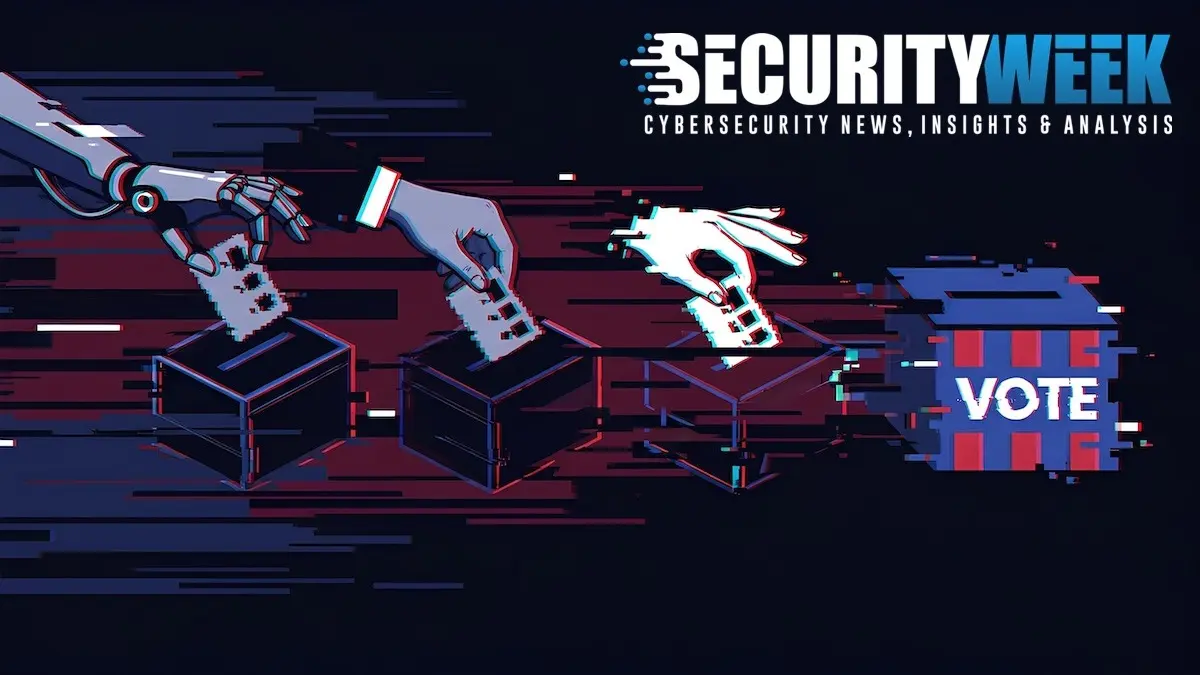
The integrity of the United States voting system remains a focal point of intense national debate, encompassing concerns that range from physical machine tampering and ballot tabulation errors to the more abstract, yet equally potent, threat of digital voter influence. While the conversation often touches on voter registration databases and the disparate voter ID requirements across state lines, these issues—while vital—often reside outside the immediate scope of cybersecurity. Instead, the primary focus for technology experts remains the structural security of the systems used to cast and count the American vote.
The Process: Casting and Counting the Ballot
The U.S. voting process is a decentralized, multi-stage operation that varies significantly by state and county. While many voters still mark paper ballots by hand, the cybersecurity conversation is increasingly centered on jurisdictions that rely on ballot-marking devices for in-person voting. These electronic systems, which allow voters to indicate their choices on a digital interface, represent the most critical intersection of technology and democracy.
In these jurisdictions, voting machines undergo a rigorous pre-certification process by the Election Assistance Commission (EAC) and are typically air-gapped to prevent remote unauthorized access. When a voter selects a candidate on the machine, the system prints a physical paper ballot. This document serves two purposes: it provides a human-readable verification for the voter to confirm their selections and often includes a barcode or QR code that encodes the same data for machine tabulation. After the voter confirms their choices, the paper ballot is scanned into a counting machine, with the physical paper remaining as a permanent record for audits. On the surface, this appears to be a robust, secure methodology. However, cybersecurity professionals argue that the reality is far more complex, and perhaps more fragile, than it appears.
Influencing the Voter: The War for Public Trust
Beyond the machines themselves, there is a persistent concern regarding foreign nations attempting to disrupt U.S. elections through influence campaigns. The primary motivation behind these efforts is not necessarily to change the final tallies, but to undermine public confidence in democratic institutions. In an era of extreme political polarization, where the electorate is often evenly split between two dominant parties, even minor shifts in public perception—or the questioning of a result’s legitimacy—can have profound consequences.
While definitive, hard proof of state-sponsored influence campaigns can be elusive, the potential for such operations remains a serious risk. Adversaries understand that they do not need to alter a single digital vote to throw a democratic system into disarray; they only need to manufacture enough doubt to cause voters on either side to lose faith in the process itself.
Securing the Integrity of the Vote
The EAC certification process, intended to ensure the security of voting and counting machines, has drawn significant criticism from industry experts. Shai Bargil, co-founder and CEO of Sequent, points to a fundamental misalignment between the certification process and the realities of modern software maintenance. The EAC certification does not map cleanly onto a four-year election cycle, and the process itself can take up to two years. In a worst-case scenario, a voting machine could be deployed in an election using software that has remained unpatched for two years or more.
"That is pretty ridiculous," Bargil notes. "In the commercial world, we patch our systems every month, but for elections, we are trusting software that hasn’t been patched for two years or more. In the final analysis, this EAC certification is pretty much meaningless."
The air-gapped nature of these machines is often cited as a primary defense, but experts argue this is an insufficient barrier. A motivated adversary with physical access can bridge an air gap. This risk is underscored by the annual "Voting Village" at DEF CON, where security researchers are granted legal access to real voting equipment. According to Bargil, nearly every machine brought to the event has been successfully compromised once researchers gained hands-on access. The prospect of a malicious actor utilizing a compromised USB stick to infect a machine early on Election Day remains a theoretical, yet plausible, nightmare scenario.

The reliance on machine-tabulated barcodes or QR codes also introduces a "black box" element. Because the voter cannot verify the digital code scanned by the machine, they are forced to trust that the software correctly interpreted their human-readable ballot. This creates two distinct problems: the potential lack of trust in the machines themselves and the increasing difficulty of ensuring the counting process is transparent and tamper-proof.
Christiaan Beek, VP of cyber intelligence at Rapid7, cautions against viewing voting machines as the ultimate source of truth. "Treat them as one component in a broader, potentially hostile system," he suggests. "Assume that the software may contain vulnerabilities, the firmware may be insecure, the supply chain may be targeted, an administrator account may be compromised, and a determined adversary may eventually gain access." His recommendation is to focus on limiting the "blast radius" of any potential compromise, providing mechanisms to reconstruct and verify the outcome independently.
Improving the Infrastructure
To bridge the security gap, experts propose significant changes to how voting systems are developed and audited. Bargil advocates for open-source software, arguing that transparency allows academics and independent security researchers to identify vulnerabilities that vendors might miss. "If you have open-source software, I can use tools to check the code and do my own pentesting. I can use AI to speed the process, and confirm that the EAC and the vendor have done their job properly."
Furthermore, some developers are pushing for encrypted voting records that are transmitted directly to the counting system, providing mathematical proof that each vote was recorded as intended. Microsoft’s ElectionGuard project has explored similar concepts, utilizing homomorphic encryption to ensure that votes are counted accurately without revealing individual identities, effectively creating an auditable, verifiable record.

However, as Dave Gerry, CEO at Bugcrowd, points out, the hardest problems are often on the perimeter. "While the machines get the headlines, the operational layer around them—voter registration databases, county websites, and the email accounts of campaign staff—is what actually protects the vote. Based on what we’ve seen, starting in 2016, this is where the adversaries focus."
The New Frontier: AI and Disinformation
The rise of artificial intelligence has introduced a new, volatile element to election interference. Adam Marrè, former FBI special agent and current CISO at Arctic Wolf, observes that geopolitical actors are increasingly focused on shaping narratives and eroding trust. "Most election-related activity today is not focused on changing votes. Instead, adversaries often seek to influence perceptions around the election itself," Marrè explains, citing phishing attacks, social media manipulation, and AI-generated misinformation as primary tools.
This was exemplified by the 2024 New Hampshire primary, which saw a deepfake robocall impersonating President Biden to discourage voters from participating. While that specific instance was thwarted, it served as a wake-up call regarding the scalability of AI-driven suppression tactics. Bobby Ford, chief strategy and experience officer at Doppel, notes that AI allows attackers to personalize and scale misinformation, making the protection of public trust a cybersecurity imperative. "As AI makes these attacks more scalable and personalized, election security has become just as much about protecting trust as it is about protecting technology," Ford says.
Ultimately, cybersecurity experts maintain that no system is immune to compromise. The goal for election officials is not to achieve the impossible standard of perfect security, but to build a system where risks are constrained, backups are verified, and manipulation is readily detectable. In a digital and geopolitical climate fraught with sophisticated threats, the resilience of American elections depends as much on the robustness of these safeguards and the transparency of the process as it does on the technology itself. As Casey Erikson of NRLabs concludes, the architectural objective remains clear: "The objective is not to eliminate risk but to constrain it. It becomes about access control. Verifiable backups are essential, and redundancy at multiple layers is best."
 Evan Lee Salim
 Nana Muazin
 Muslim