
 By Suro Senen
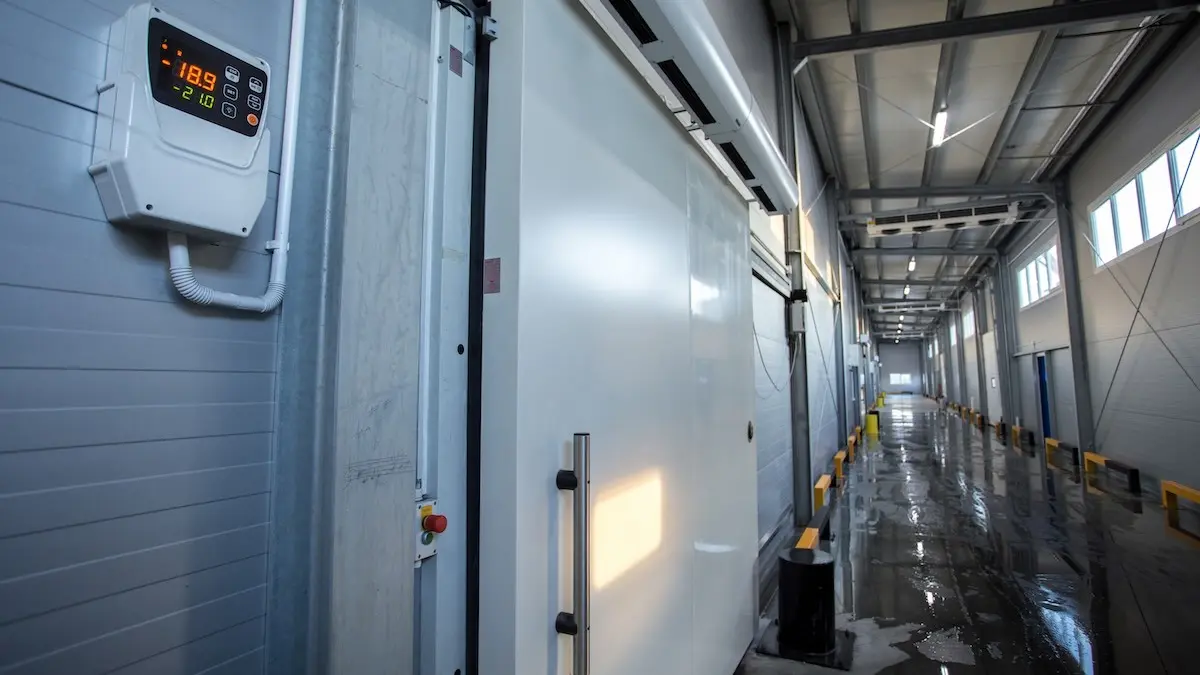
In a major escalation of cyber threats against critical infrastructure, the United States government has issued an urgent advisory urging organizations across the healthcare, chemical, food, and transportation sectors to immediately harden their industrial refrigeration and cold chain monitoring systems. This directive follows a string of sophisticated cyberattacks in Europe that have effectively weaponized supermarket and medical facility cooling infrastructure, resulting in millions of dollars in losses and raising significant concerns regarding public safety and supply chain integrity.
Over the past several weeks, malicious actors have demonstrated an alarming ability to breach monitoring systems, enabling them to remotely manipulate the temperatures of industrial-grade fridges and freezers. The fallout from these intrusions has been both swift and severe. In a coordinated campaign on October 11, hundreds of supermarkets were simultaneously targeted. In a calculated move to maximize damage, the attackers remotely adjusted refrigerator temperatures to a sweltering 50 degrees Celsius (122 degrees Fahrenheit) and forced freezers into defrost cycles. The resulting spoilage was catastrophic, destroying vast inventories of perishable goods. In some instances, the forced operation of these units under extreme conditions triggered fires, adding physical destruction to the financial and operational chaos.
The threat did not subside after the initial wave. A second, more targeted series of attacks occurred this week, impacting over 100 supermarkets and, most concerningly, a facility operated by the French Blood Establishment (EFS). While the supermarket chains once again suffered heavy inventory losses, the medical sector managed to avoid a public health catastrophe. Quick, decisive action by EFS staff prevented the compromise of critical blood products and biological samples. The incident served as a chilling reminder of the potential consequences when attackers move beyond retail targets to breach essential healthcare infrastructure.
The identity of the perpetrators remains a subject of intense investigation and debate. Reports have surfaced suggesting that Russian hacktivist groups, specifically Noname057(16) and the Z-Pentest Alliance, have claimed responsibility for attacks on industrial controller manufacturers like Danfoss, leading to speculation that these same actors are behind the wider refrigeration campaign. However, experts caution that these claims should be viewed with skepticism. As noted by the BBC, the possibility that these attacks are the work of Iranian hacktivists or other state-sponsored actors cannot be ruled out. In the complex world of modern cyber warfare, the use of "hacktivist" personas is frequently employed to mask the involvement of more sophisticated state-backed operations.
The seriousness of the situation has prompted a rare, multi-agency response from the US government. The Cybersecurity and Infrastructure Security Agency (CISA), the Federal Bureau of Investigation (FBI), the Department of Health and Human Services (HHS), the Department of Agriculture (USDA), and the Department of Transportation (DoT) have confirmed that they are actively monitoring reports of malicious cyber actors targeting electronic temperature controllers and commercial refrigeration systems.
In a formal advisory, these agencies explained the technical methodology behind the attacks. They noted that malicious actors are exploiting vulnerabilities in unpatched or internet-accessible controllers to gain unauthorized remote access. Once inside, the attackers can alter system settings, forcing refrigeration units into continuous heating or defrost cycles. Beyond the obvious risk of inventory loss, these manipulations can cause critical equipment to malfunction, leading to long-term hardware degradation and, as witnessed in Europe, genuine fire hazards that threaten the safety of facility staff and customers.
According to the government advisory, the attackers are leveraging a variety of well-known attack vectors, including authentication bypasses, code injection, and the exploitation of weak security configurations. By gaining access to management interfaces, hackers can not only tamper with temperature settings but also initiate "denial-of-view" conditions, which effectively blind operators to the status of their systems, preventing them from realizing that an attack is in progress until the damage is already done.
The scope of the vulnerability is significant. Internet intelligence firm Censys has been tracking the exposure of these devices, providing a sobering look at how many systems were left open to the public internet prior to the recent warnings. As of October 9, Censys identified 6,695 internet-exposed refrigeration controllers. By November 5, following the surge in awareness and the subsequent government warnings, that number had dropped to 3,124—a reduction of approximately 47%.
The Censys analysis specifically highlighted two of the most widely used platforms in the industry: the Copeland/Dixell XWEB and the Danfoss StoreView controllers. The data revealed that XWEB exposure decreased by 35%, falling from 3,708 to 2,420 exposed units, while StoreView exposure dropped by a more dramatic 76%, from 3,004 to 708. While this trend represents a positive shift in security posture, the fact that thousands of these devices remain directly accessible via the internet remains a major point of concern for cybersecurity officials.
To mitigate these risks, the US government has provided a clear, prioritized set of recommendations. The primary directive is unequivocal: organizations should immediately take their industrial control systems off the public internet. Removing these devices from direct web exposure is the most effective way to eliminate the primary attack vector. For organizations where remote access is deemed an absolute operational necessity, the government advises that these systems must be shielded behind robust firewalls or specialized edge devices that strictly filter and monitor incoming traffic.
Beyond simple isolation, the agencies are urging facility operators to adopt a "defense-in-depth" approach to operational technology (OT) security. This includes the physical or logical isolation of OT devices from corporate networks to prevent lateral movement by attackers. Access should be restricted only to verified, trusted identities, and organizations must enforce strong password policies in conjunction with phishing-resistant multifactor authentication (MFA).
Maintaining software integrity is also a cornerstone of the advisory. Operators are urged to ensure that all controller firmware and management software are regularly updated to patch known vulnerabilities. Furthermore, in the event that a system is successfully compromised, the government emphasizes the importance of maintaining offsite, immutable backups. This ensures that even if data is corrupted or settings are altered, the organization can restore its operations without bowing to the demands of attackers. Finally, the implementation of comprehensive logging and continuous monitoring is essential for detecting anomalous behavior in real-time, allowing security teams to intervene before a minor system glitch escalates into a major operational catastrophe.
The targeting of cold chain infrastructure highlights a broader, growing trend in which traditional industrial systems—historically isolated from the digital world—are increasingly being connected to the internet to enable remote management. While this integration offers significant operational efficiencies, it also expands the attack surface for bad actors. As the line between information technology and operational technology continues to blur, the security requirements for facilities managing food, medicine, and chemical storage must evolve to match the sophistication of those currently targeting them. The recent European incidents have provided a stark wake-up call, proving that in a hyper-connected world, the security of a refrigeration unit is no longer just a maintenance issue; it is a critical matter of national security and public safety.
 Evan Lee Salim
 Nana Muazin
 Muslim