
 By Asro
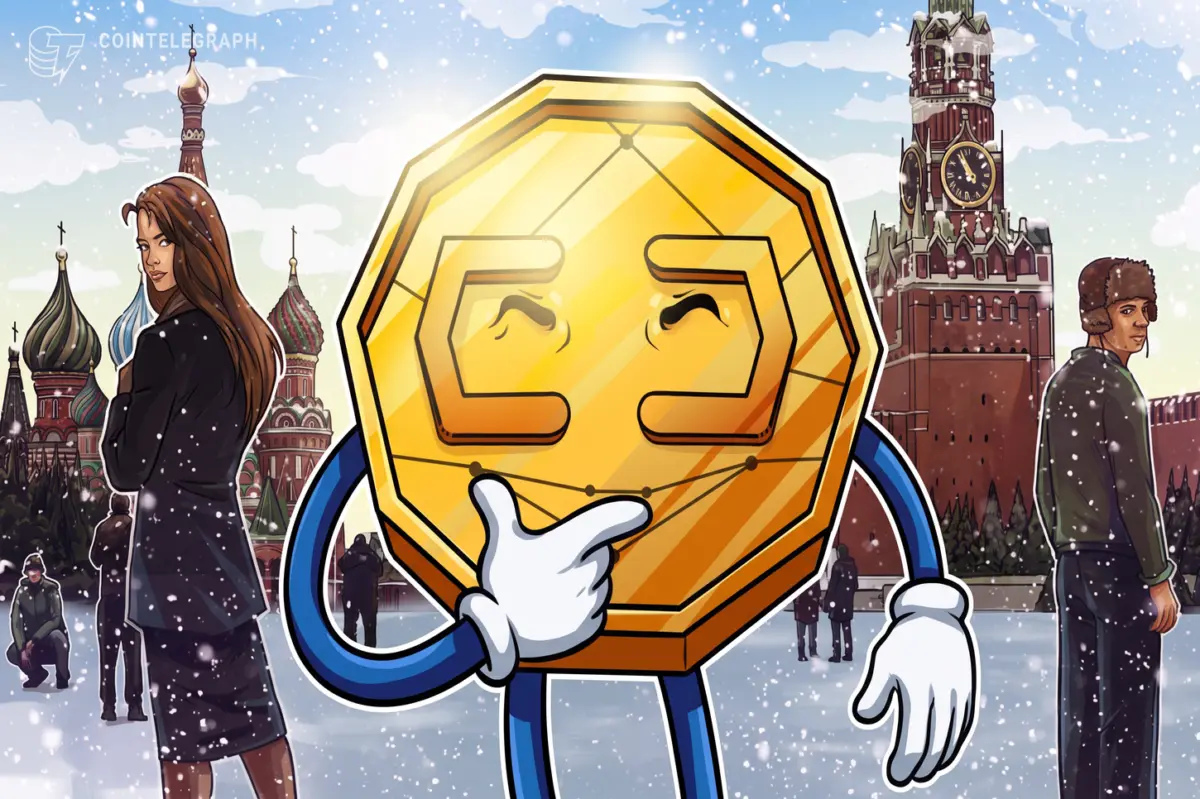
Russia’s ongoing regulatory push to bring digital asset trading under strict government oversight has inadvertently triggered widespread anxiety across the domestic financial sector. While Moscow seeks to formalize and institutionalize cryptocurrency trading, market participants are increasingly concerned that the resulting transparency will expose them directly to severe international sanctions.
The core of the tension lies in the Bank of Russia’s mandate requiring companies to join a public registry of cryptocurrency exchangers. According to industry insiders familiar with internal regulatory discussions, several firms are fiercely reluctant to associate their operations with this official list due to the looming threat of becoming designated targets for Western punitive measures.
Representatives from the digital asset sector repeatedly petitioned the central bank to keep the registry private, arguing that public disclosure would act as a beacon for international regulators and foreign enforcement agencies. However, the Russian central bank steadfastly refused these appeals. The monetary authority maintained that cryptocurrency businesses must adhere to the exact same compliance, transparency, and reporting requirements as traditional financial service providers operating within the country.
This regulatory friction coincides with geopolitical developments abroad, as the European Union actively prepares its 22nd sanctions package against Russia. This upcoming tranche of restrictions is widely anticipated to introduce rigorous new limitations and prohibitions targeting Russian cryptocurrency platforms and digital asset infrastructure, amplifying the fears felt by domestic market operators.
Russia’s Crypto Registry Grows to 30 but Trading Launch Remains Blurry
The regulatory framework underpinning these changes formally took effect on Monday, opening the door for retail investors in Russia to legally buy major digital assets, including Bitcoin, Ether, and Tether’s USDt. In step with the rollout, the Bank of Russia updated its official registry to feature 30 authorized exchange operators.
The roster of approved institutions includes heavyweights of the Russian banking sector, most notably major lenders Sberbank and VTB. Despite their inclusion on the registry, possessing official registration status does not automatically mean that retail customers can immediately execute transactions. The operational reality of the market is far more complex.
Alexander Nam, a researcher at HSE University’s Center for Decentralized Finance and Digital Financial Assets Research, pointed out that the domestic market still faces a myriad of technical, operational, and regulatory hurdles. These obstacles span mandatory investor testing procedures, sophisticated order execution mechanisms, trade settlement protocols, and digital asset custody solutions.
Being formally included in the registry does not in itself mean that an institution is operationally ready to fully serve retail investors, Nam noted. His perspective was echoed by Alexander Brazhnikov, a representative of the Russian Association of Cryptocurrency and Blockchain, who stated that as of Monday’s launch window, he could not identify a single registered operator that was actively offering confirmed, operational retail access to cryptocurrency trading.
EU Sanctions Plans Loom Over Russia’s December Crypto Launch
Despite the initial operational ambiguities, the infrastructure continues to build momentum toward broader availability. The Moscow Exchange, Russia’s primary securities trading venue commonly known as MOEX, has scheduled the launch of its cryptocurrency trading services for December 1. Under the established framework, retail and institutional investors will not access the crypto markets directly through the exchange; instead, they will route their trades through traditional licensed brokers.
In the lead-up to this scheduled rollout, industry observers have sought further clarification on specific implementation plans. Media inquiries sent to major participants including VTB, T-Invest Lab, and MOEX regarding their respective crypto trading launch schedules remained unanswered by publication time.
The timing of Russia’s domestic crypto integration places it directly in the crosshairs of evolving international diplomacy and economic warfare. Reports indicate that the European Commission plans to formally present its next comprehensive package of sanctions against Russia just ahead of the European Council summit scheduled for November 26 and 27. This timing means new international restrictions could drop mere days before MOEX launches its digital asset marketplace in December.
The juxtaposition of domestic financial liberalization and external economic pressure was highlighted by Russian President Vladimir Putin during remarks at the Asia-Pacific Economic Cooperation summit in Shenzhen. Putin asserted that Western economic sanctions have ultimately backfired against their creators, arguing that the restrictive measures have instead served to strengthen the Russian economy and accelerate the country’s pivot toward trade partnerships in the Asia-Pacific region.
This regulatory evolution and geopolitical sparring unfold against a backdrop of shifting transactional volumes within the region. According to data compiled by blockchain analytics firm Chainalysis, broader cryptocurrency activity within Russia has experienced a notable contraction. The total value of cryptocurrency transactions associated with the country fell by 14.7% over the course of the year, dropping to $284.1 billion for the twelve-month period ending in June. Despite this downward adjustment in overall transaction value, Russia continues to command a dominant market position, accounting for roughly 44% of all cryptocurrency activity across Eastern Europe.
 Evan Lee Salim
 Azzam Bilal Chamdy
 Neng Nana