
 By rifanmuazin
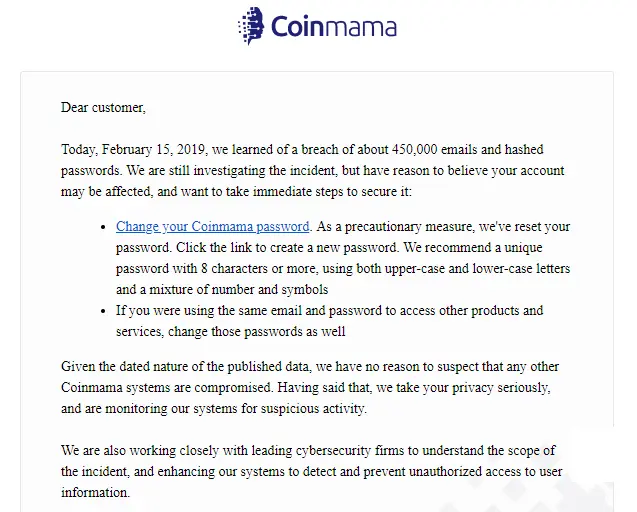
One of the world’s leading cryptocurrency brokerage platforms has fallen victim to a significant security breach, exposing the vulnerability of centralized digital asset services. Coinmama, a popular destination for individuals looking to buy and sell cryptocurrencies, experienced the cyberattack on February 15. The incident resulted in the unauthorized exposure of sensitive user data, including email addresses and passwords belonging to approximately 450,000 registered accounts.
According to preliminary findings released by the company and cyber intelligence analysts, the massive data breach extended far beyond a single system. The attack involved roughly 24 different websites and databases associated with Coinmama, culminating in the exposure of approximately 747 million data records globally. Despite the staggering scale of the overall database records involved in the multi-site incident, Coinmama’s specific exposure was contained to a fraction of its total community. The platform currently boasts a robust user base of over 1.3 million registered users worldwide, meaning the breach impacted a substantial yet delimited subset of early adopters and account holders.
The Discovery
Moments after the unauthorized intrusion was detected, the platform’s management and internal technical teams took swift, decisive measures to stem the bleeding and assess the full scope of the compromise. The breach came to light after a comprehensive list containing the compromised email addresses and passwords was leaked and circulated within dark web forums, triggering automated threat-monitoring alerts.
Following an intensive internal forensic review, the investigating team at Coinmama determined that approximately 450,000 users were directly affected by the leak. Further analysis revealed that the impacted accounts primarily belonged to individuals who had registered on the platform prior to August 5, 2017, pointing toward an older, legacy segment of the database infrastructure that may have retained outdated security protocols or vulnerabilities.

Crucially, however, the platform was quick to deliver reassuring news regarding user funds. No cryptocurrencies were stolen during the course of the cyberattack, and none of the leaked login credentials appeared to have been successfully utilized to access or drain users’ digital wallets. In response to the discovery, Coinmama immediately mobilized a communication campaign, notifying all affected users and strongly advising them to update their login details and change their passwords across any platforms where identical credentials might have been reused. Furthermore, the company pledged to overhaul and significantly strengthen the underlying security architecture of its platform to thwart any future attempts at unauthorized access.
Not The First
While the scale of the Coinmama breach has sent shockwaves through the digital asset community, the brokerage is far from being the only prominent online platform to experience this specific type of cyber intrusion. In recent years, several mainstream digital services and consumer applications—including well-known brands such as MyFitnessPal and dating platform Coffee Meets Bagel—have suffered strikingly similar data breaches.
Industry experts suggest that these incidents share a common threat vector rather than isolated security failures. Speaking to technology publication TechCrunch, Ariel Ainhoren from threat intelligence firm IntSights shed light on the mechanics behind the attacks. According to Ainhoren, the exact same system vulnerability has been exploited by malicious actors to infiltrate multiple large-scale databases across the internet.
Many of these compromised platforms were operating a particular database software known as PostgreSQL. Once hackers successfully penetrated the primary entry point or administrative system, the underlying vulnerability allowed them to systematically extract and download massive databases across multiple interconnected websites and services, compounding the severity of the initial intrusion. This revelation underscores a broader systemic challenge facing digital infrastructure providers, where a single software flaw can have cascading consequences across diverse industries.
Tricky Timing

The timing of the Coinmama security breach could hardly have been worse for the broader cryptocurrency industry. The incident unfolded just as damaging reports were widely circulating regarding another prominent digital asset platform, QuadrigaCX, which had famously lost control of millions of dollars in customer funds stored in inaccessible cold wallets following the sudden passing of its founder.
Incidents of this magnitude, occurring in rapid succession, inevitably erode public trust. They cause widespread anxiety and lead customer confidence in the broader cryptocurrency markets—and centralized exchanges in particular—to wane significantly. For an industry that has fought tirelessly for mainstream financial legitimacy and consumer adoption, successive blows to exchange security and operational transparency are unwelcome developments that threaten to stall market momentum.
These compounding events have only added fuel to a growing public sentiment that cryptocurrency exchanges frequently maintain inadequate security and management systems. Critics argue that many platforms fail to invest sufficiently in safeguarding their users’ digital assets against increasingly sophisticated cyber threats.
At the same time, industry veterans point out that such high-profile breaches, while deeply troubling, often represent isolated cases within a rapidly maturing ecosystem. Major industry-leading crypto exchanges such as Binance, Coinbase, and Gemini have consistently maintained rigorous, enterprise-grade security standards. These larger institutions have successfully fortified their systems and have remarkably never suffered a successful external hacking incident since entering the digital asset industry, proving that robust security frameworks are entirely achievable when prioritized at the highest levels of corporate governance.
 Neng Nana
 Basiran
 Muslim