 By Asep Darmawan
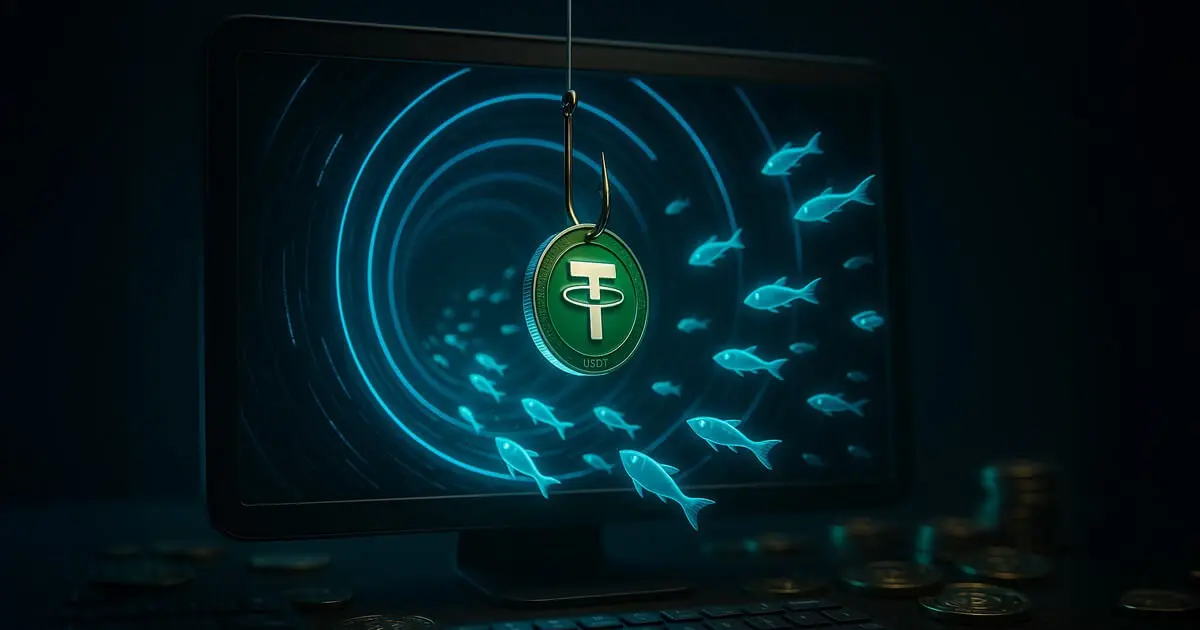
A cryptocurrency trader suffered devastating financial losses after falling victim to an address poisoning scam twice within a span of just a few hours, resulting in the theft of more than $2.5 million worth of Tether (USDT). The incident highlights the persistent and evolving dangers of user-interface manipulation exploits within the digital asset ecosystem, where a single moment of inattention can lead to catastrophic consequences.
According to a report published on May 26 by blockchain security and threat intelligence firm Scam Sniffer, the catastrophic sequence of events began when the trader attempted to execute a routine transfer. Unbeknownst to the user, they copied a manipulated wallet address directly from their transaction history, believing it to be a valid recipient address they had previously interacted with. This single error resulted in an initial transfer of approximately $843,000 in USDT straight into the hands of the malicious actors controlling the fraudulent address.
Rather than realizing the mistake immediately or thoroughly verifying the full alphanumeric string of the destination wallet before proceeding further, the trader attempted another transaction just hours later. Repeating the exact same fatal mistake, the victim sent an even larger sum—roughly $1.7 million in USDT—to the very same poisoned address. By the time the realization set in, a staggering $2.5 million had been permanently siphoned away through the automated mechanisms deployed by the scammers.
The method utilized in this multi-million dollar theft is known across the blockchain security community as address poisoning or history poisoning. This insidious tactic relies heavily on the common user habit of copying and pasting wallet addresses directly from recent transaction logs rather than utilizing secure address books, scanning QR codes, or verifying every single character of a destination string.
In an address poisoning attack, malicious actors monitor public mempools or blockchain data to identify active wallet addresses. Once targeted, the scammers generate vanity or look-alike addresses that share identical starting and ending characters with the victim’s frequent transaction partners. They then execute dust transactions—sending minuscule, often worthless amounts of cryptocurrency—from these look-alike addresses to the victim’s wallet.
Because many crypto wallet interfaces display recent transactions by truncating the middle characters of an address and showing only the first few and last few digits, the malicious address seamlessly blends into the transaction history. When the user later searches their history to copy a trusted address for a new payment, they inadvertently select the attacker’s look-alike address, assuming it belongs to a legitimate counterparty. These exploits have surged in frequency and scale, increasingly targeting high-net-worth crypto users who handle substantial capital and rely on the convenience of their wallet interfaces.

Scams and Social Engineering Risks
While technical exploits like address poisoning continue to drain millions from unsuspecting traders, malicious actors are simultaneously expanding their arsenals through sophisticated social engineering tactics designed to manipulate users into surrendering total control of their funds. Blockchain security researchers and analysts have repeatedly warned that technological safeguards alone are insufficient if human vulnerabilities remain easily exploitable.
In a parallel development highlighting these growing threats, blockchain security firm SlowMist recently shed light on a sweeping wave of targeted SMS phishing campaigns affecting prominent digital asset platforms. In these operations, bad actors disseminate fraudulent text messages impersonating major centralized cryptocurrency exchanges, most notably Coinbase. The messages typically manufacture a sense of urgency by falsely claiming that the recipient’s account has experienced a severe security breach, an unauthorized login attempt, or a frozen withdrawal.
Victims are instructed to call a customer support phone number provided directly within the text message. When the alarmed users call the number, they are connected to fluent, highly convincing fraudulent agents operating fake support centers. These impostors expertly guide the victims toward sophisticated phishing websites meticulously designed to mimic official exchange login portals.
Once on these fraudulent sites, users are prompted to enter their private recovery phrases, secret backup keys, or mnemonic seed phrases under the guise of verifying their identity or restoring account security. Providing this sensitive information grants the hackers unrestricted, full access to the victims’ underlying cryptocurrency wallets, allowing them to instantly sweep all remaining assets.
Renowned on-chain investigator ZachXBT has previously emphasized the devastating financial toll exacted by these psychological manipulation tactics, noting that social engineering scams targeting Coinbase users alone have historically accounted for hundreds of millions of dollars in losses on an annual basis. The sheer scale of these operations underscores a worrying shift in cybercrime methodology, moving away from complex protocol-level smart contract exploits toward direct manipulation of human behavior.
In response to the escalating frequency of both technical interface exploits and social engineering campaigns, cybersecurity experts and blockchain analysis firms continue to urge heightened vigilance across the entire crypto community. Security protocols consistently recommend that users completely refrain from sharing their private recovery phrases under any circumstances, ignore unsolicited text messages, phone calls, or emails regarding account security, and independently verify all critical communications by navigating directly to official websites or verified mobile applications. As malicious actors continue to refine their methods, the onus remains heavily on individual traders to adopt rigorous verification habits to protect their digital assets from irreversible loss.
 Laily UPN
 Asro
 Neng Nana