
 By rifanmuazin
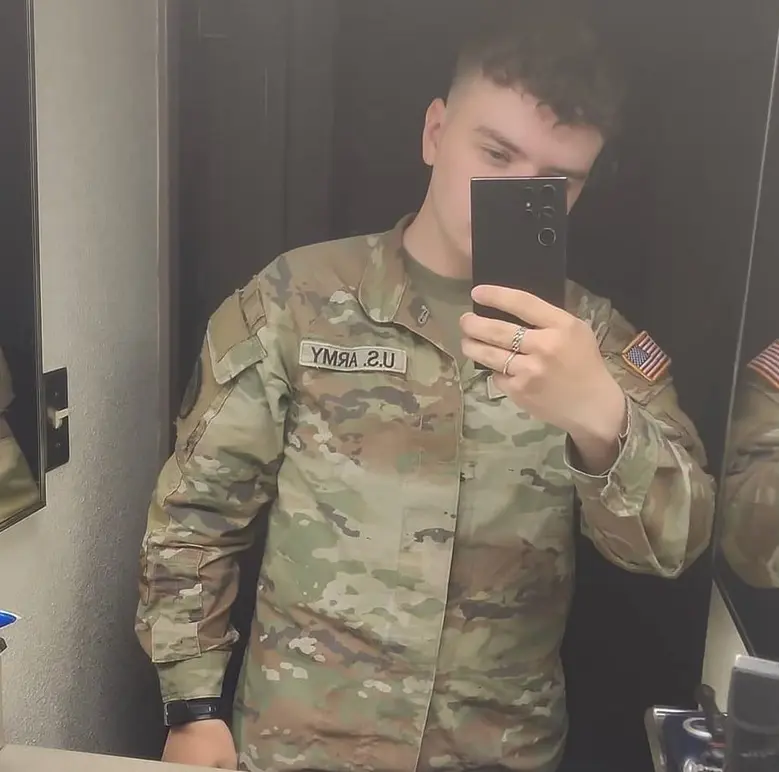
A former U.S. Army soldier who admitted to orchestrating a sophisticated series of cyberattacks against major telecommunications companies, ultimately stealing mobile call and text metadata belonging to more than 100 million AT&T customers, was sentenced to 70 months in federal prison today. In addition to the nearly six-year prison term handed down in a Seattle federal courtroom, the defendant was ordered to pay approximately $294,978 in restitution to his victims.
Cameron John Wagenius, a 22-year-old former service member who was stationed at a U.S. Army base in South Korea at the time of the offenses, operated under the online cybercriminal persona "Kiberphant0m." Working alongside a network of alleged co-conspirators, Wagenius exploited compromised credentials and weak security postures at cloud data storage provider Snowflake—specifically targeting accounts that failed to enforce multi-factor authentication, a security lapse that prompted Snowflake to subsequently mandate multi-factor authentication across all user accounts.
The breadth of the breaches became public in October 2024, when Kiberphant0m took to prominent cybercrime forums to boast about stealing call and text metadata, including source and destination phone numbers, timestamps, and call durations, for tens of millions of AT&T customers. Operating globally, Kiberphant0m claimed responsibility for infiltrating more than a dozen telecommunications providers worldwide, including Verizon’s Push-to-Talk business, and publicly extorted the targeted companies under the threat of publishing the sensitive proprietary data.
The trail leading to Wagenius began to solidify in late November 2024, when cybersecurity journalist Brian Krebs published reporting indicating that the persona Kiberphant0m likely belonged to a U.S. soldier stationed in South Korea. Less than a month after those investigative reports surfaced, Wagenius was apprehended and subsequently faced two separate federal indictments. He moved quickly through the judicial process, pleading guilty to all counts across both cases.
Federal prosecutors detailed that Wagenius did not operate in a vacuum, receiving assistance in his extortion campaigns from 28-year-old Kenneth Schuchman of Vancouver, Washington, an individual with a documented and extensive history in the cybercrime underworld. Schuchman previously pleaded guilty in 2019 to operating the Satori botnet, a vast and dangerous collection of compromised Internet-of-Things devices that were weaponized to launch large-scale distributed denial-of-service attacks against critical internet infrastructure.
Other alleged co-conspirators tied to the Snowflake data thefts continue to face legal repercussions. Conor Riley Moucka, operating under the alias "Judische" out of Kitchener, Ontario, was arrested in 2024 and entered a guilty plea in August 2026. Meanwhile, John Erin Binns, an American national residing in Turkey, remains wanted by authorities not only for his alleged role in the current extortion ring but also for a massive 2021 data breach at T-Mobile that exposed the personal records of at least 76 million customers.
As the extortion scheme escalated, Wagenius engaged in aggressive re-extortion tactics and made alarming threats to disclose classified national security information. Even after AT&T and other victims had already paid the extortion syndicate a Bitcoin ransom equivalent to $370,000, and immediately following the arrest of co-conspirator Moucka, Kiberphant0m published what he claimed were AT&T call logs belonging to then President-elect Donald Trump and then Vice President Kamala Harris. He also dumped documents alleged to be schematics stolen from the U.S. National Security Agency.
The gravity of the security breach prompted a rare, multi-agency federal response involving the Defense Criminal Investigative Service, the investigative arm of the Department of Defense Office of Inspector General. Paul Russell, a resident agent in charge at DCIS, noted the unprecedented nature of discovering that an active-duty soldier holding a secret security clearance was actively developing hacking tools and trafficking in stolen data.
According to Russell, the revelation immediately mobilized elite federal partners, including the Federal Bureau of Investigation, the Army Criminal Investigative Division, and the U.S. Secret Service. The unique convergence of an insider threat within the military holding high-level clearance made the investigation an urgent priority from its inception.
Despite his immediate guilty plea and subsequent cooperation with federal authorities, court records reveal that Wagenius continued his disruptive behavior even while incarcerated and awaiting sentencing. A sentencing memorandum filed by federal prosecutors in Seattle on September 19 detailed how Wagenius violated the computer use policies of the Bureau of Prisons in an ongoing attempt to probe and discover security vulnerabilities within the prison system’s internal computer networks.
BOP records cited by prosecutors indicate that in September 2025, Wagenius manipulated another inmate’s email account to send queries to a commercial artificial intelligence tool. Using proxy communication, he asked the AI to provide Common Vulnerabilities and Exposures identifiers related to Windows 10 Enterprise privilege escalation, alongside real-world working exploit scripts with no omitted code. Less than a week later, utilizing a different inmate’s email access, he solicited step-by-step instructions and code for CVE-2023-45208, a command injection vulnerability affecting D-Link networking devices.
During the same timeframe, Wagenius attempted to research how to construct improvised radio antennas using prison commissary items to extend reception, alongside inquiries concerning prison escape methods. Prosecutors noted that Wagenius frequently framed these malicious prompts as research for a book he claimed to be writing, employing a common prompt-injection technique designed to bypass safety filters built into commercial AI models to prevent the generation of actionable exploitation code.
While federal prosecutors confirmed they found no evidence that Wagenius successfully deployed or utilized these researched vulnerabilities within BOP systems—with Wagenius claiming he was merely identifying flaws to assist the prison administration—the incident underscored his persistent technical fixation.
Ironically, despite the immense scale of the stolen data and the widespread panic caused by his extortion demands, Wagenius’s criminal enterprise yielded remarkably little financial return. Government filings revealed that across all of his high-profile hacking and extortion campaigns, Wagenius netted a grand total of approximately $1,500 from selling stolen data.
As prosecutors summarized in the sentencing memorandum, while Wagenius ultimately proved unsuccessful as a financially motivated cybercriminal, his deliberate actions inflicted profound, widespread harm on individual consumers, major corporate entities, and the national security apparatus of the United States.
 Asro
 Ammar Sabilarrohman
 Laily UPN