
 By Dwi Wanna
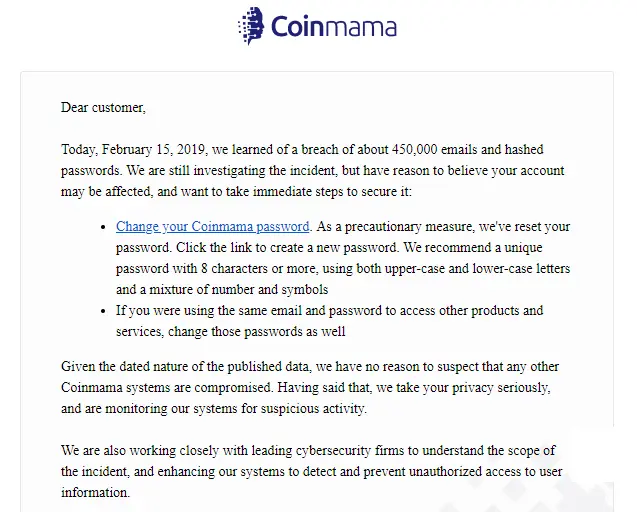
One of the prominent cryptocurrency brokerage platforms operating globally has fallen victim to a significant security breach, underscoring ongoing vulnerabilities within digital asset infrastructure. Coinmama, a well-known service facilitating the purchase of cryptocurrencies, experienced a security compromise on February 15. The incident resulted in the unauthorized exposure of sensitive user data, specifically targeting the email addresses and encrypted passwords of more than 450,000 registered accounts.
The scope of the security event was substantial, involving approximately 24 distinct websites and applications associated with the Coinmama ecosystem. In total, the breach exposed a massive repository containing about 747 million data records across the affected digital properties. Despite serving a robust global community boasting a user base of over 1.3 million individuals, the platform’s rapid deployment of containment strategies ultimately limited the direct impact on active users.
The Discovery and Immediate Response
Moments after the unauthorized intrusion was detected, the platform’s management and technical teams took swift, decisive measures to stem the breach and secure the infrastructure. The emergency response was triggered after investigators discovered that a compiled list containing compromised user email addresses and passwords had been leaked and circulated within dark web marketplaces.
According to comprehensive forensic findings released by the investigating team at Coinmama, approximately 450,000 individual user accounts were affected by the data leak. A crucial detail emerging from the internal investigation was the timeline of the affected accounts; the breach primarily impacted legacy users who had registered and joined the platform prior to August 5, 2017.

Crucially, despite the exposure of login credentials, company representatives confirmed that no digital currencies were stolen during the incident. Furthermore, an exhaustive review of system logs indicated that none of the leaked login information had been successfully utilized by malicious actors to gain unauthorized access to active user financial balances or wallets.
In the wake of the discovery, Coinmama moved swiftly to notify all affected account holders, strongly urging them to update their login details and modify their passwords immediately to prevent the leaked information from being exploited elsewhere. Additionally, the corporate leadership pledged to overhaul and significantly strengthen the underlying security architecture and defense systems on the platform, aiming to fortify the infrastructure against any potential unauthorized access attempts in the future.
Part of a Broader Wave of Cyber Intrusions
The security incident at Coinmama is far from an isolated occurrence within the broader digital landscape. In recent years, numerous high-profile online platforms and consumer-facing applications have experienced similar intrusions, highlighting systemic cybersecurity challenges. Well-known consumer applications, including fitness tracking giant MyFitnessPal and online dating platform Coffee Meets Bagel, have previously suffered comparable data breaches involving large-scale credential leaks.
Industry experts have pointed to common technological vulnerabilities utilized by threat actors across multiple targets. Speaking to technology publication TechCrunch, Ariel Ainhoren, a security researcher from threat intelligence firm IntSights, shed light on the technical mechanics behind these widespread attacks. According to Ainhoren, a specific vulnerability has been systematically exploited to infiltrate large corporate databases across various online services.
Many of these compromised platforms were running a particular database management software, specifically PostgreSQL. The identified vulnerability allowed malicious actors to successfully penetrate the main system architecture and subsequently download expansive database files across multiple interconnected websites and associated web properties. This shared vulnerability explains why multiple distinct organizations have faced similar large-scale data exposures during the same operational timeframe.

Tricky Timing for the Digital Asset Ecosystem
The timing of the security breach at Coinmama could hardly be worse for the broader cryptocurrency industry. The incident occurred concurrently with widespread media reports detailing another major crisis involving a prominent cryptocurrency exchange known as QuadrigaCX. In that separate event, the exchange lost control of millions of dollars in customer funds stored in inaccessible cold storage wallets following the unexpected passing of its founder, leaving thousands of users unable to access their digital wealth.
Incidents of this magnitude inevitably weigh heavily on public perception, causing confidence in cryptocurrency markets—and centralized digital asset exchanges in particular—to wane. For an industry that relies heavily on trust, transparency, and robust security to attract mainstream adoption, a succession of high-profile platform failures and data leaks represents a public relations challenge that exchange operators can ill afford.
These compounding events have only added fuel to a growing public sentiment that cryptocurrency exchanges frequently maintain inadequate security frameworks and administrative management systems. Critics argue that these systems often fall short of providing the rigorous protection required to safeguard users’ valuable digital assets against sophisticated cyber threats.
Nevertheless, industry analysts emphasize that these cases should be viewed within the proper context, noting that they largely represent isolated incidents rather than an industry-wide inevitability. A significant portion of the global cryptocurrency trading volume is handled by major, established exchanges such as Binance, Coinbase, and Gemini. These leading institutions have established exceptionally high security standards, incorporating multi-layered cold storage, advanced encryption, and rigorous internal compliance protocols, and have successfully maintained pristine security records since their inception in the digital asset sector.
 Azzam Bilal Chamdy
 Evan Lee Salim
 Nila Kartika Wati