
 By Asro
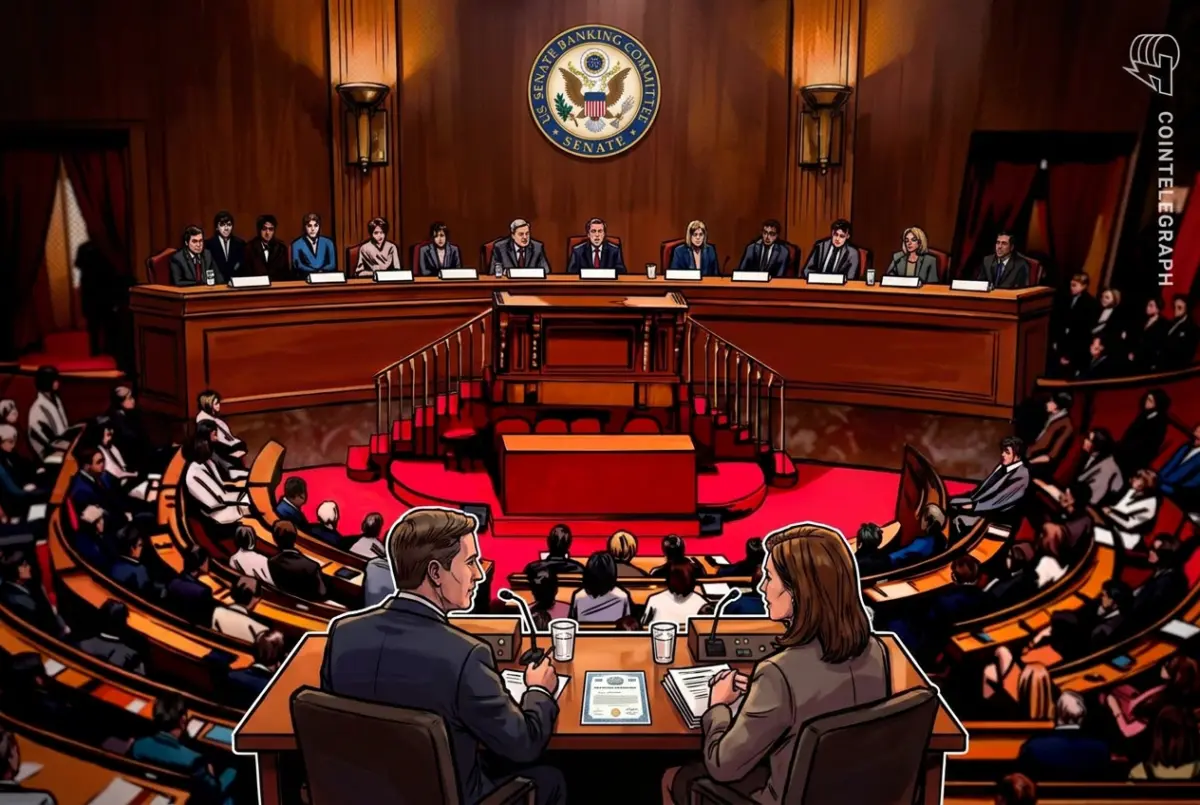
President Donald Trump’s nominees to fill two crucial vacancies at the United States Securities and Exchange Commission (SEC) faced rigorous questioning on Capitol Hill on Thursday, addressing a wide array of topics including investor protections, regulatory oversight, and the rapid pace of financial innovation. During the high-stakes Senate confirmation hearing before the Senate Banking Committee, lawmakers closely scrutinized the federal agency’s evolving approach to emerging digital asset markets, with a particular focus on its recent regulatory stance on tokenized securities.
The dual confirmation hearing featured Kristin Johnson, the administration’s Democratic nominee and a former commissioner at the Commodity Futures Trading Commission (CFTC), alongside Steven Levine, a Republican nominee and former policy aide to SEC Commissioner Mark Uyeda. If successfully confirmed by the full Senate, the two nominees would expand the current three-person commission to a four-member panel, consisting of three Republicans and one Democrat. This shift in the agency’s composition comes at a time when the broader regulatory landscape is undergoing significant transformation. In recent months, the SEC has visibly scaled back certain traditional enforcement actions while simultaneously pursuing various regulatory adjustments designed to accommodate digital assets and distributed ledger technology. Among these initiatives, efforts to facilitate tokenized securities markets have drawn intense scrutiny from both lawmakers and nervous market participants.
A central point of contention during Thursday’s proceedings was the SEC’s controversial regulatory exemption issued on September 17. The policy allows qualifying trading platforms to facilitate the trading of blockchain-based versions of U.S.-listed equities without needing to formally register as traditional national securities exchanges, provided they meet specific conditions. The order took effect immediately upon its release, though the agency simultaneously invited public comments regarding possible future modifications.
Addressing Democratic Senator Angela Alsobrooks during the hearing, Kristin Johnson voiced strong support for utilizing a more formal rulemaking process to properly address the complex concerns surrounding the agency’s exemption for tokenized stock trading. Johnson emphasized her belief in transparent administrative procedures, stating that regulatory frameworks are inherently strengthened when subjected to rigorous public scrutiny. She indicated that she would warmly welcome the opportunity to address the substantive issues covered by the current exemption through a thorough notice-and-comment rulemaking process.
Johnson also highlighted broader concerns extending beyond basic investor protection, pointing specifically to the challenges associated with Anti-Money Laundering (AML) and Know Your Customer (KYC) compliance within tokenized trading environments. Her cautious approach stands in contrast to the rapid implementation of the SEC’s recent innovation exemptions, signaling that a confirmed Democratic commissioner could push for tighter controls and more formalized procedures within the agency.
Companies Reject Tokenized Stock Listings
The debate over blockchain-based equities is not confined to congressional hearing rooms. The SEC’s innovation exemption has already sparked substantial pushback from the corporate sector. According to a public notice filed on November 5, as many as 67 publicly traded companies have formally voiced objections regarding the unauthorized tokenization of their shares on the OKXICE platform. Corporate leaders have expressed deep apprehension about having their equity instruments mirrored or traded on blockchain networks without their explicit consent, raising legal, operational, and governance concerns.
When questioned about these industry-wide anxieties, Steven Levine offered a different perspective, noting that he had not yet had the opportunity to study the innovation exemption in exhaustive detail. However, Levine stated his understanding that the exemption was explicitly designed to be time-limited and structured with inherent investor protections. He reminded the committee that Congress deliberately granted the SEC the statutory authority to issue exemptions from federal securities laws under circumstances where doing so serves the public interest and remains entirely consistent with mandatory investor protection requirements.
To illustrate his point regarding regulatory adaptability, Levine drew a parallel to the evolution of exchange-traded funds (ETFs). He noted that ETFs—now a cornerstone of modern global finance—initially developed and matured through targeted regulatory exemptions before eventually becoming subject to the broader, codified agency rules that govern them today. His remarks underscored a philosophy that regulatory bodies must remain flexible enough to accommodate novel financial products while gradually establishing permanent guardrails.
Senate Weighs Bipartisan SEC Appointments
The impending appointments arrive at a pivotal moment for the digital asset industry, which has long grappled with regulatory uncertainty in the United States. Should Johnson be confirmed, she will serve as the sole Democratic commissioner on the panel. Interestingly, some key figures within the cryptocurrency ecosystem believe that a bipartisan makeup could ultimately foster a more balanced and durable regulatory environment.
Speaking on the broader implications of the confirmation, Jessica Martinez, U.S. policy director at digital asset infrastructure firm Fireblocks, suggested that digital assets should transcend partisan divides. She noted that regulatory frameworks emerging from a bipartisan commission typically stand on much firmer legal and political footing. Martinez added that even minority commissioners can exert meaningful influence over agency policy by aggressively challenging regulatory proposals and insisting that unresolved structural issues are fully debated and settled before rules are officially finalized.
The confirmation process now moves to its next legislative phase. Senators were given until noon Friday to submit any additional written questions to both nominees, with formal responses scheduled to be delivered by 5:00 p.m. Eastern Time on November 24, according to closing remarks from the committee leadership. Following the collection and review of these responses, the nominations are expected to advance to a full committee vote. If approved at the committee level, the appointments will proceed to the Senate floor for final consideration, where both nominees must secure a majority vote before officially taking their seats at the commission.
 Evan Lee Salim
 Azzam Bilal Chamdy