
 By Nana Muazin
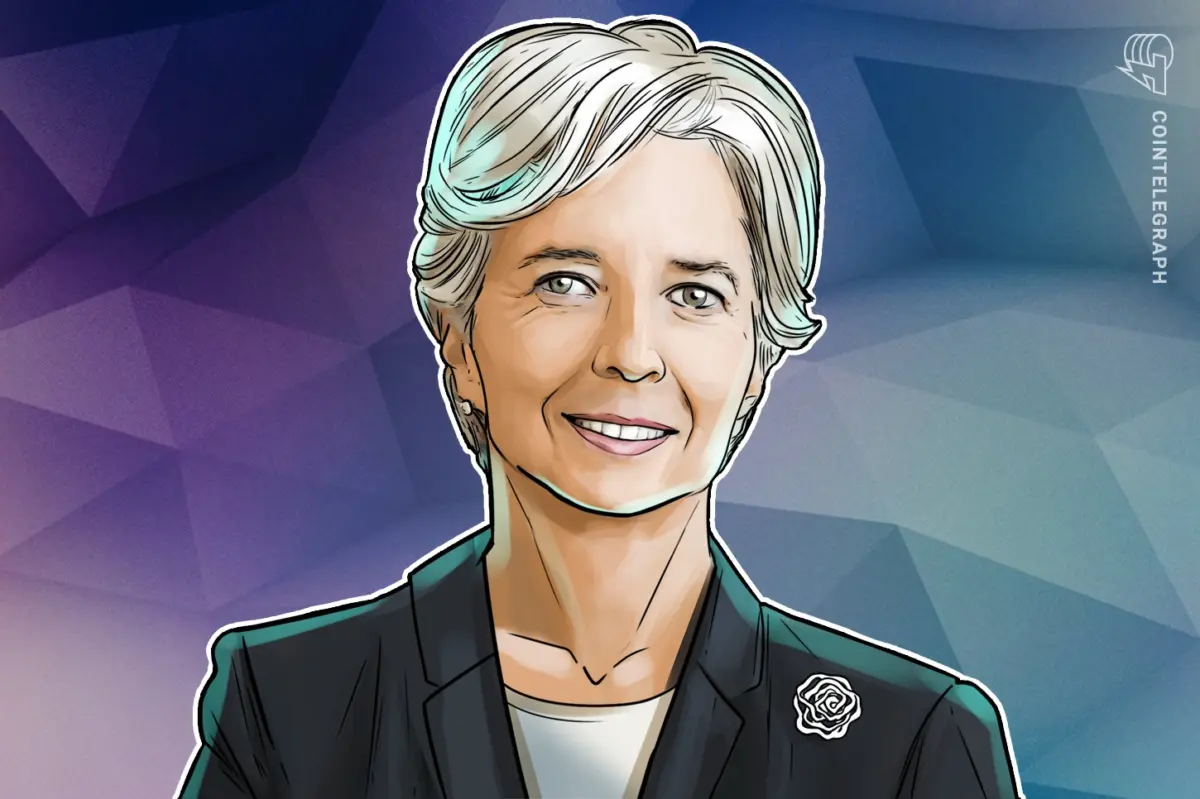
European Central Bank (ECB) President Christine Lagarde warned on Friday that Europe’s burgeoning market for tokenized securities faces a serious risk of fragmentation if different platforms adopt incompatible standards and fail to establish common rules for cross-platform trade settlement.
Speaking at the Frankfurt European Banking Congress, Lagarde emphasized that while blockchain technology offers powerful efficiencies by allowing financial firms to issue, trade, and settle securities on a single integrated platform, the rapid expansion of the asset class demands immediate structural foresight. According to the ECB chief, the global market for tokenized assets reached approximately 23 billion euros in March, marking a staggering fivefold increase from its size just one year prior.
This explosive growth underscores both the accelerating institutional adoption of distributed ledger technology and the urgent need for regulatory and operational harmony across the European Union. Lagarde noted that while Europe possesses the economic scale and market depth to build a unified and cohesive market for these digital assets, individual platforms risk becoming isolated silos as they grow. If emerging trading networks implement disparate, non-standardized rules, they may ultimately find themselves technically unable to settle trades with one another, creating severe liquidity bottlenecks and fracturing the single financial market.
Addressing an audience of senior central bankers, policymakers, and financial executives, Lagarde stressed that averting this fragmentation requires proactive coordination between financial authorities and legislative bodies. While central banks and market overseers can provide the technical rails and settlement infrastructure, the creation of overarching regulatory frameworks falls squarely on lawmakers.
“Common rules will be needed too, and those lie with legislators,” Lagarde stated during her address, signaling that regulatory certainty must keep pace with technological innovation to prevent the balkanization of Europe’s digital finance landscape.
The warning from the ECB president comes at a time when the Eurosystem is actively building out the foundational infrastructure required to support tokenized finance safely and efficiently. In September, the Eurosystem launched a key settlement initiative known as Pontes. This system is designed to provide financial institutions with a reliable mechanism to settle tokenized securities transactions using central bank money, effectively bridging the gap between traditional central bank liquidity and modern blockchain-based assets.
The practical utility of this infrastructure was demonstrated earlier in November, when the European Stability Mechanism successfully utilized the Pontes project to settle a digital bond worth 1 billion euros. The successful execution of such a large-scale transaction highlights the growing readiness of European institutions to adopt blockchain rails for debt issuance and settlement, moving proofs-of-concept into real-world financial operations.
Complementing these settlement efforts, the Eurosystem is also spearheading a second major initiative called Appia. Through this project, the central bank framework is collaborating closely with private market participants to formulate common standards for tokenized securities across the continent. As part of this roadmap, the Eurosystem plans to publish a comprehensive blueprint in 2028, aiming to guide market actors toward interoperability and shared technical protocols before proprietary standards become too deeply entrenched.
Lagarde’s remarks in Frankfurt also coincide with a significant timeline for European central banking leadership. The ECB president is scheduled to step down from her role in February 2027, leaving her successor to oversee the subsequent rollout of the Appia blueprint and the ongoing integration of digital assets within the Eurozone’s financial architecture.
As tokenized finance transitions from an experimental sector into an established pillar of the modern capital markets, the warnings voiced by the ECB leadership highlight a critical juncture for European policymakers. Without concerted efforts to harmonize regulations and technical protocols today, the promise of a seamless, borderless digital single market for securities could be undermined by the very technological innovation designed to unify it.
 Laily UPN
 Sagoh
 Suro Senen