
 By Iffa Jayyana

Support for Bitcoin Improvement Proposal 110 (BIP-110), a temporary soft fork designed to curb the amount of arbitrary data included in transactions at the consensus level, has climbed to 2.38% across the network. According to metrics provided by The Bitcoin Portal, 583 out of 24,481 active nodes are currently running the proposal, with Bitcoin Knots serving as the primary node software implementation facilitating the soft fork.
The introduction of BIP-110 marks a significant counter-offensive by a segment of the Bitcoin community following sweeping protocol updates that removed historical restrictions on arbitrary data storage. Under the terms of the temporary soft fork, the proposal establishes strict parameters by limiting transaction output sizes to 34 bytes while capping the OP_RETURN data limit at 83 bytes. According to documentation hosted on the proposal’s official GitHub page, the soft fork is intended to operate for a strict term of one year, after which the measures may be extended, altered, or allowed to expire depending on the network’s consensus state and ongoing community debate.

The core technology at the center of the dispute, OP_RETURN, is a script code inherent to the Bitcoin protocol that allows users to embed arbitrary pieces of data directly into the blockchain ledger. While the feature has existed in various forms for years, it has recently become the subject of intense friction and ideological debate within the global Bitcoin community. This renewed controversy was catalyzed by the rollout of Bitcoin Core version 30, the latest major upgrade for the most widely deployed Bitcoin node software package.
Prior to the rollout of version 30, the OP_RETURN data limit was tightly capped at 83 bytes, a restriction that had long served as a guardrail to prevent the blockchain from being bloated with non-monetary data. However, Bitcoin Core developers unilaterally removed this established limit in version 30 following a controversial pull request initially proposed in April 2025. Records from the official GitHub repository indicate that the pull request faced substantial opposition from the broader Bitcoin community during its review phase, highlighting a growing ideological divide between core development teams and network operators over the fundamental purpose and utility of the blockchain.
The Arbitrary Data Issue Creates a Deep Divide Within the Bitcoin Community
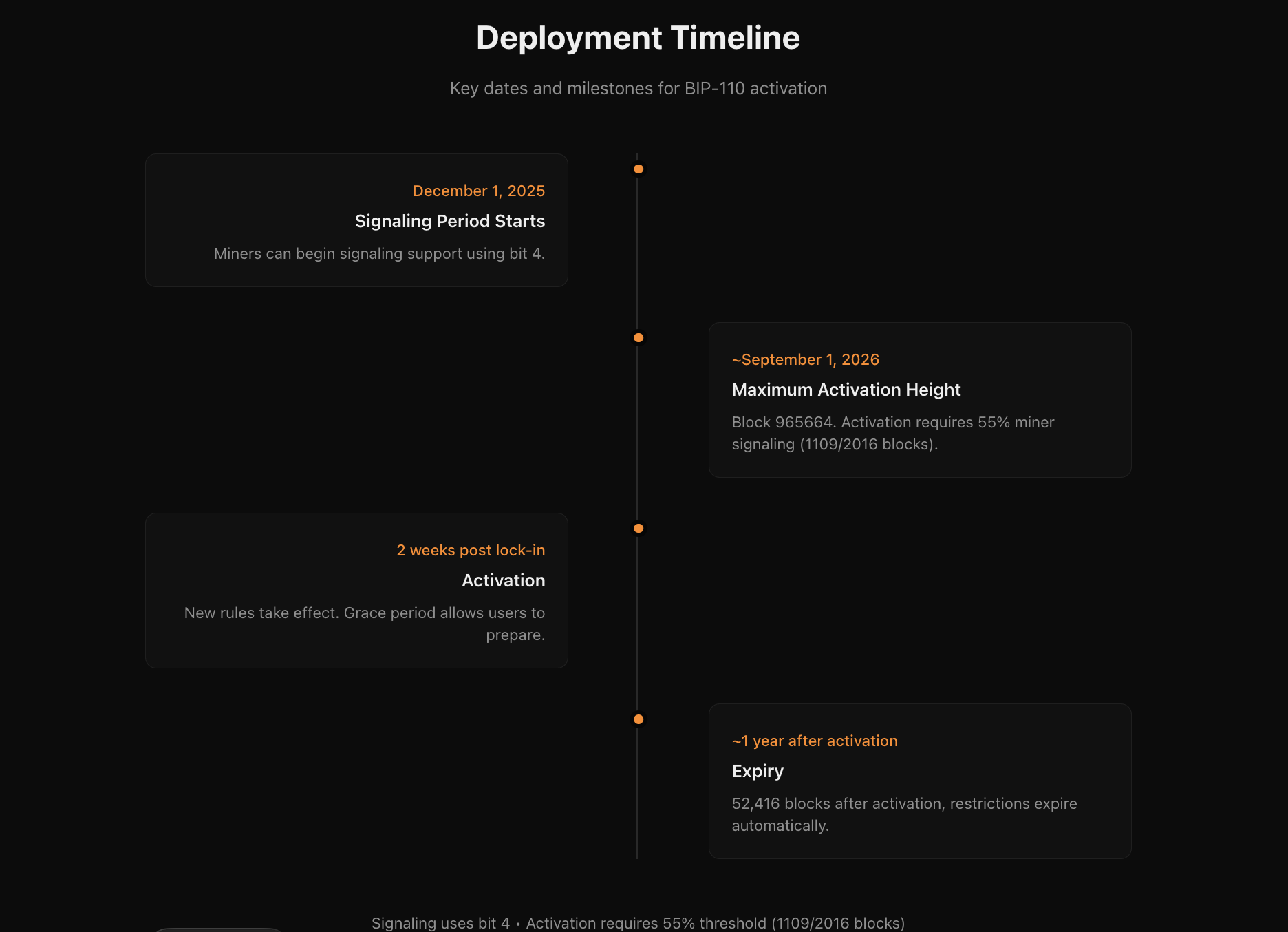
The contentious Bitcoin Core update that officially removed the long-standing arbitrary data limit went live in October 2025. The deployment immediately triggered a torrent of negative feedback from critics, analysts, and decentralization advocates across the ecosystem. Opponents of the change argue that lifting the arbitrary data limit actively incentivizes the inclusion of network spam, transforming a decentralized monetary ledger into a generalized data storage medium for arbitrary files, inscriptions, and other non-financial applications.
A primary concern driving the opposition is the direct economic and physical impact that data bloat has on network infrastructure. Arbitrary data significantly increases the storage and bandwidth costs required to run a full Bitcoin node. Unlike high-throughput alternative blockchains that naturally generate massive quantities of data and consequently demand specialized enterprise-grade hardware, Bitcoin has historically prided itself on being runnable on modest, consumer-grade personal computers.
Critics emphasize that raising hardware requirements through unchecked data growth directly undermines Bitcoin’s core value proposition of operating as a resilient, censorship-resistant, and decentralized monetary network. If running a node becomes prohibitively expensive due to bloated block space, the number of independent validators will inevitably shrink, leading to higher centralization risks.
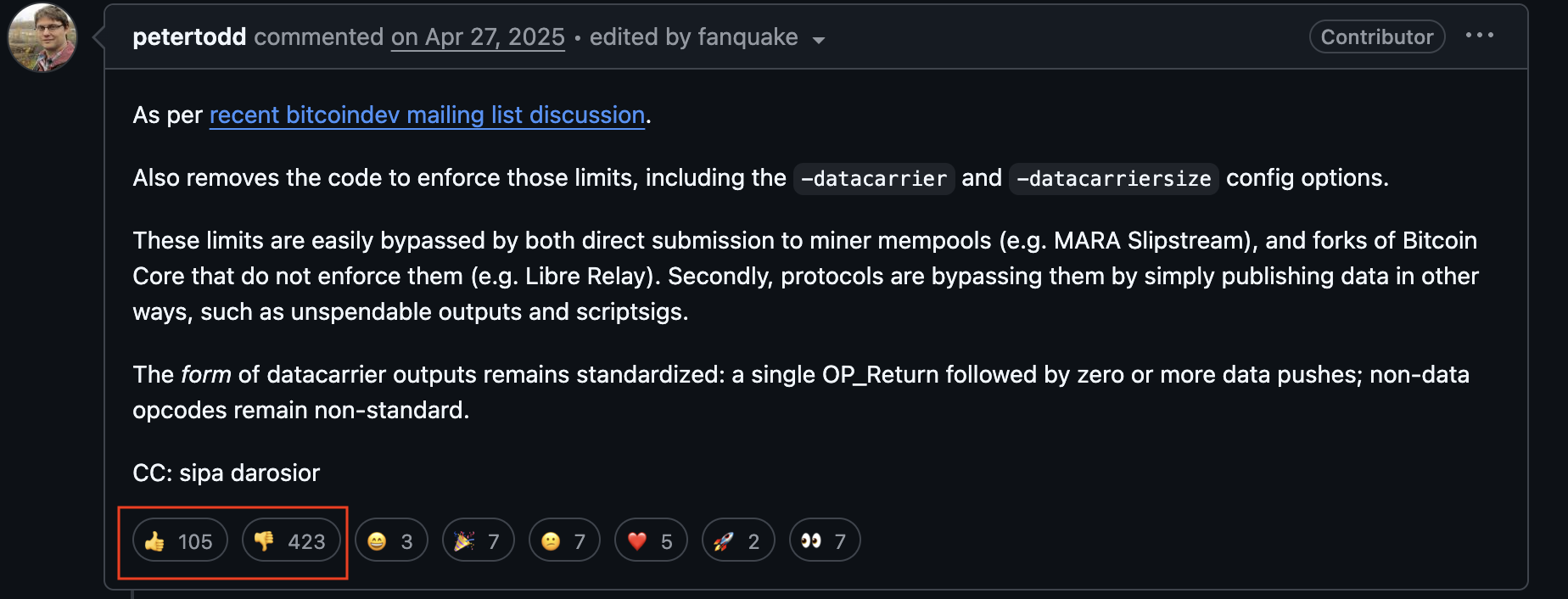
Voicing strong opposition to the trajectory set by the core upgrade, prominent Bitcoin advocate and educator Matthew Kratter likened the influx of network spam to a destructive natural phenomenon during a recent public commentary. Describing the long-term threat to the network’s structural integrity, Kratter noted that it resembles a parasitical plant like ivy completely covering a tree, consuming it until the inner scaffolding collapses and the entire structure falls apart because its foundational support has been eroded. He warned that this represents the precise danger that uncurbed network spam poses to the architecture of Bitcoin.
Conversely, supporters of the uncapped approach maintain a different philosophy regarding network transactions and fee markets. Proponents of the removal, including notable figures like Bitcoin Core contributor Jameson Lopp, have argued in favor of an open architecture, contending that artificial protocol filters do little to effectively stop network spam and that free-market fee dynamics should ultimately dictate how block space is utilized.
As the debate persists, the growing adoption rate of BIP-110 and its implementation through alternative software solutions like Bitcoin Knots demonstrates that a vocal portion of node operators are willing to actively signal and organize around preserving tighter data constraints at the consensus level.
 Ali Ikhwan
 Neng Nana
 Suro Senen