
 By Lina Irawan

The Bitcoin network requires a dedicated, "conservative" client node software implementation to safeguard its core monetary properties and fortify its overarching decentralization, according to Jimmy Song. Song serves as the co-founder of ProductionReady, a non-profit organization focused on funding open-source Bitcoin node software development and educational initiatives within the broader cryptocurrency ecosystem.
In a recent discussion, Song explained that his organization operates with an inherent "bias" against introducing significant code changes to the Bitcoin network unless there is "overwhelming" community support backing the proposed modifications. This cautious stance stems from a fundamental philosophy regarding the preservation of the asset’s sound money characteristics.
"The general principle is: if you’re not sure a change makes the money better, don’t make it," Song told Cointelegraph, highlighting the conservative mindset that ProductionReady aims to foster among developers and node operators alike.
This ideological framework places a heavy emphasis on maintaining low operational thresholds for running a node, which ProductionReady views as a primary line of defense against centralization. As part of its overarching mission, the organization expects to actively restore the traditional 83-byte OP_Return data limit for arbitrary, non-monetary information embedded within Bitcoin transactions. Keeping node storage and bandwidth requirements under control by limiting arbitrary data is essential for preserving network decentralization over the long term.

"The more self-sovereign Bitcoin users are, the more decentralized and resilient the network becomes," Song said, elaborating on the necessity of keeping the financial and technical costs of running a full node low enough for ordinary individuals to participate.
"When storage and bandwidth requirements grow, fewer people verify for themselves, and the network centralizes by default. A conservative client takes that tradeoff seriously," he continued.
By maximizing the total number of independent nodes and ensuring the software remains fully accessible to the average user, the Bitcoin network hardens itself against various vectors of attack. This accessibility directly reduces the likelihood of bad actors successfully cheating the system by submitting false transactions or a small, privileged group of entities colluding to centralize network governance and validation.
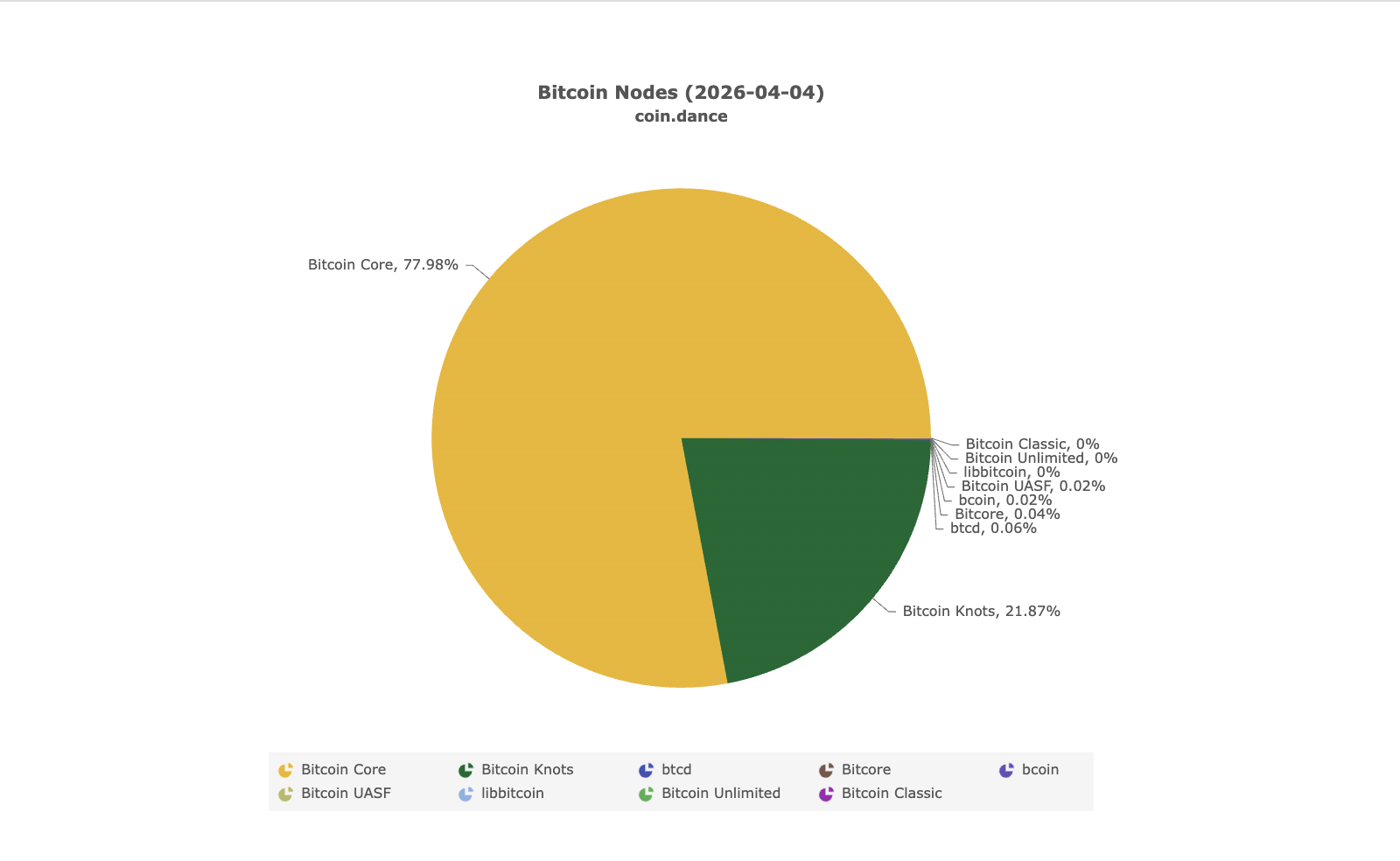
Despite alternative implementations gaining traction, Bitcoin Core continues to serve as the software of choice for the vast majority of node runners across the global network. Current metrics indicate that approximately 77.8% of the network runs some version of the Bitcoin Core software, while roughly 21.8% operates on Bitcoin Knots, a prominent alternative client implementation.
Bitcoin Core 30 Removes the OP_Return Data Limit, Sparking Major Pushback
The broader conversation surrounding node storage capacity and on-chain spam evolved into a fiercely contested debate throughout 2025. These tensions reached a boiling point after Bitcoin Core developers unilaterally modified the longstanding 83-byte data limit in Bitcoin Core version 30, which represented the latest major software upgrade to the primary reference implementation for Bitcoin node software.
Despite encountering significant and vocal pushback from wide swaths of the Bitcoin community, the historical data limit was abruptly expanded to 100,000 bytes in the version 30 release. To contextualize the scale of the community backlash, the specific development proposal aimed at altering the limit received approximately four times as many downvotes as it did upvotes on the proposal’s official GitHub pull request page.
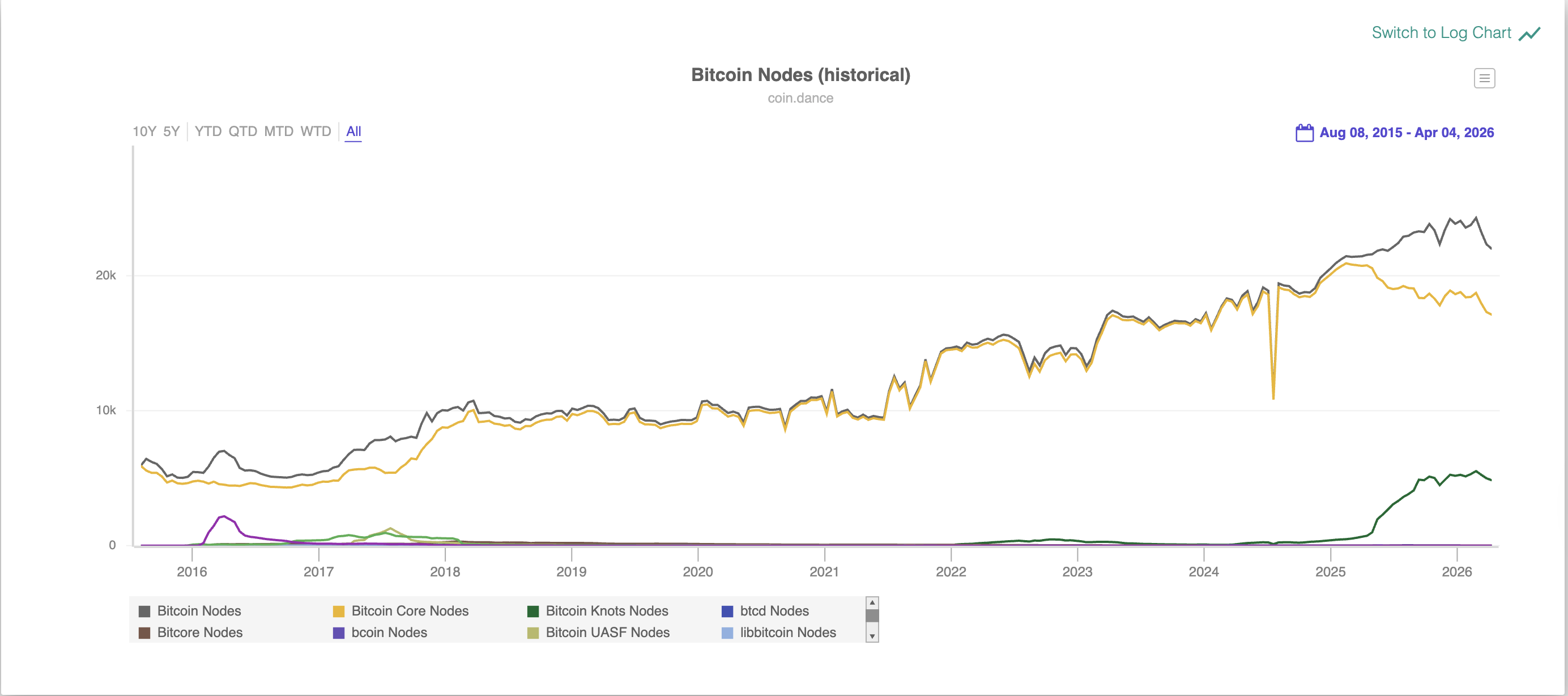
The controversial release of Bitcoin Core version 30 went live in October 2025, immediately triggering a historic and unprecedented surge in the number of Bitcoin nodes migrating away from Core to run Bitcoin Knots. This alternative implementation of the node client software quickly absorbed the displaced user base, reflecting a deep ideological divide between developers and grassroots node operators regarding how the base layer of the blockchain should handle arbitrary data and transaction bloat.
In the wake of the upgrade, the number of active nodes running Bitcoin Knots surged to record-breaking highs throughout 2025. According to data tracking resources like Coin Dance, there are currently 4,746 active Bitcoin Knots nodes operating globally, which represents over 21.7% of all nodes on the entire network.
This dramatic migration highlights a massive shift in network dynamics. For comparison, only about 1% of the entire Bitcoin network was actively running the Knots software during the course of 2024, long before developers formally announced the controversial decision to eliminate the traditional OP_Return function limits.
 Ali Ikhwan
 Neng Nana
 Suro Senen