
 By Siti Muinah

The Bitcoin network requires a dedicated "conservative" client node software implementation to preserve its core monetary properties and strengthen long-term network decentralization. This assessment comes from Jimmy Song, co-founder of ProductionReady, a non-profit organization focused on funding open-source Bitcoin node software development and community education.
According to Song, the organization maintains a deliberate bias against implementing significant code modifications unless there is an overwhelming level of community consensus and support behind the proposed changes. In an interview, Song encapsulated the guiding philosophy of the initiative, stating that the fundamental rule for network development should be centered on monetary preservation.
The general principle guiding this approach is straightforward: if developers are not entirely certain that a proposed modification will improve the monetary asset, the change should simply not be made. This cautious perspective has gained renewed traction as debates surrounding network storage, data limits, and client software diversity take center stage within the broader cryptocurrency ecosystem.

ProductionReady expects to actively restore the traditional 83-byte OP_Return data limit for arbitrary, non-monetary information embedded within Bitcoin transactions. Song emphasized that keeping node storage costs as low as possible by strictly limiting arbitrary data usage is an absolute necessity for maintaining network decentralization.
The rationale behind this focus on storage and resource requirements is rooted in the fundamental architecture of peer-to-peer electronic cash systems. The more self-sovereign individual Bitcoin users can remain, the more decentralized and resilient the network ultimately becomes. Achieving this level of self-sovereignty requires keeping the operational cost of running a full node low enough that ordinary people can easily do it on standard hardware.
When storage and bandwidth requirements grow unchecked, fewer everyday participants are able to independently verify the blockchain for themselves. Consequently, the network tends to centralize by default as validation becomes concentrated among a smaller group of well-resourced entities. A conservative client software implementation takes this crucial tradeoff seriously, prioritizing accessibility and user-run verification above feature expansion.
Maximizing the absolute number of independent nodes and ensuring they remain accessible to the average user hardens the overall security of the Bitcoin network. This widespread distribution significantly reduces the probability of malicious actors cheating the system by submitting false transactions or a small cohort of powerful entities colluding to centralize network governance and validation.
Despite the growing appetite for alternative implementations, Bitcoin Core continues to be the dominant software of choice for the vast majority of node runners across the globe. Network metrics indicate that approximately 77.8% of the global network runs some version of the standard Core software, while roughly 21.8% currently run Bitcoin Knots, highlighting a shifting landscape in client software preferences.
Bitcoin Core 30 removes the OP_Return data limit, sparking major pushback
The issues of node storage bloat and on-chain spam transformed into hot-button topics throughout the cryptocurrency community after Bitcoin Core developers unilaterally altered the long-standing 83-byte data limit in Bitcoin Core version 30. This release represented the latest major software upgrade to the reference implementation historically relied upon by the vast majority of Bitcoin node operators.
The established limit was drastically adjusted upward to 100,000 bytes, despite significant pushback and expressed concern from broad segments of the Bitcoin community. To contextualize the scale of the controversy, the official proposal to modify the data limit received approximately four times as many downvotes as it did upvotes on the proposal’s public GitHub pull request page.
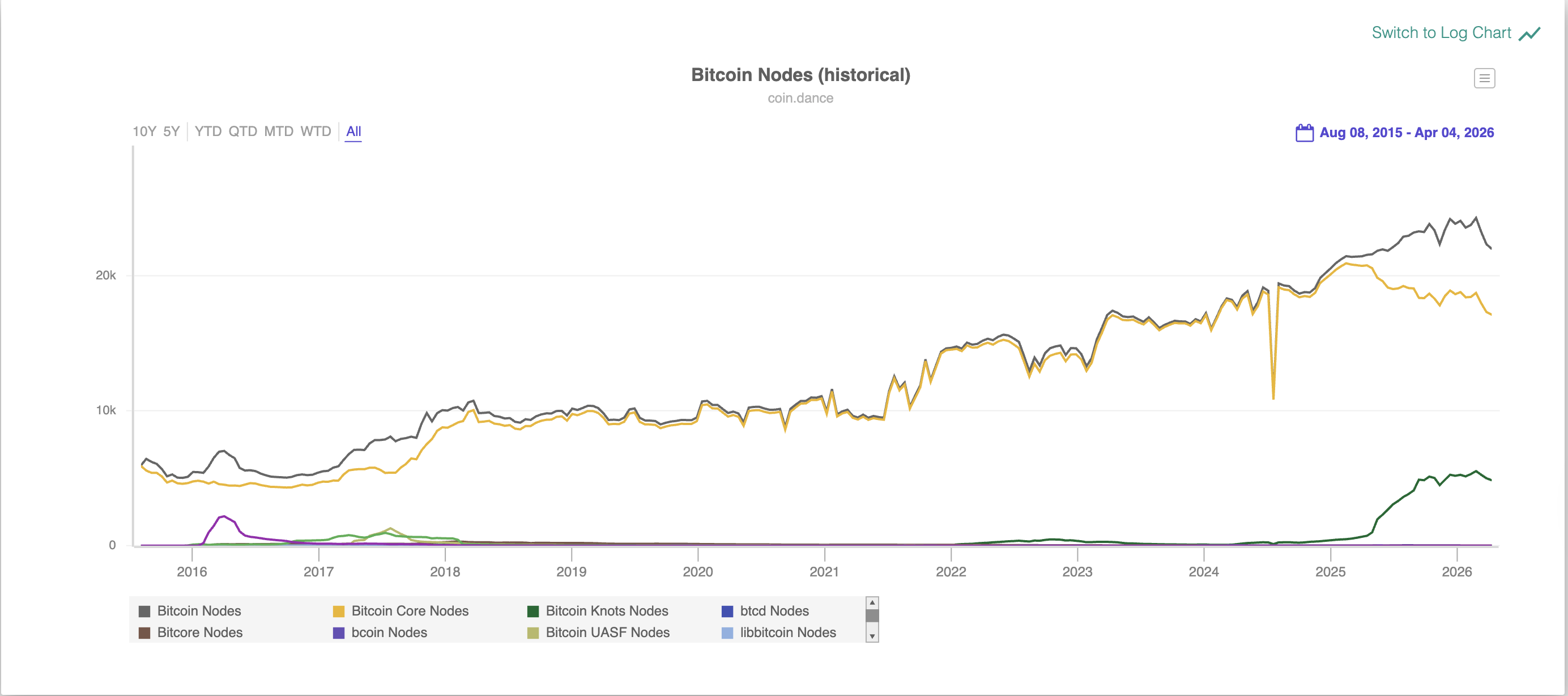
Bitcoin Core 30 officially went live in October 2025, triggering a historic and unprecedented surge in the number of Bitcoin nodes transitioning away from the reference client to run Bitcoin Knots, an alternative implementation of the node client software that maintains stricter rules regarding arbitrary data and network spam.
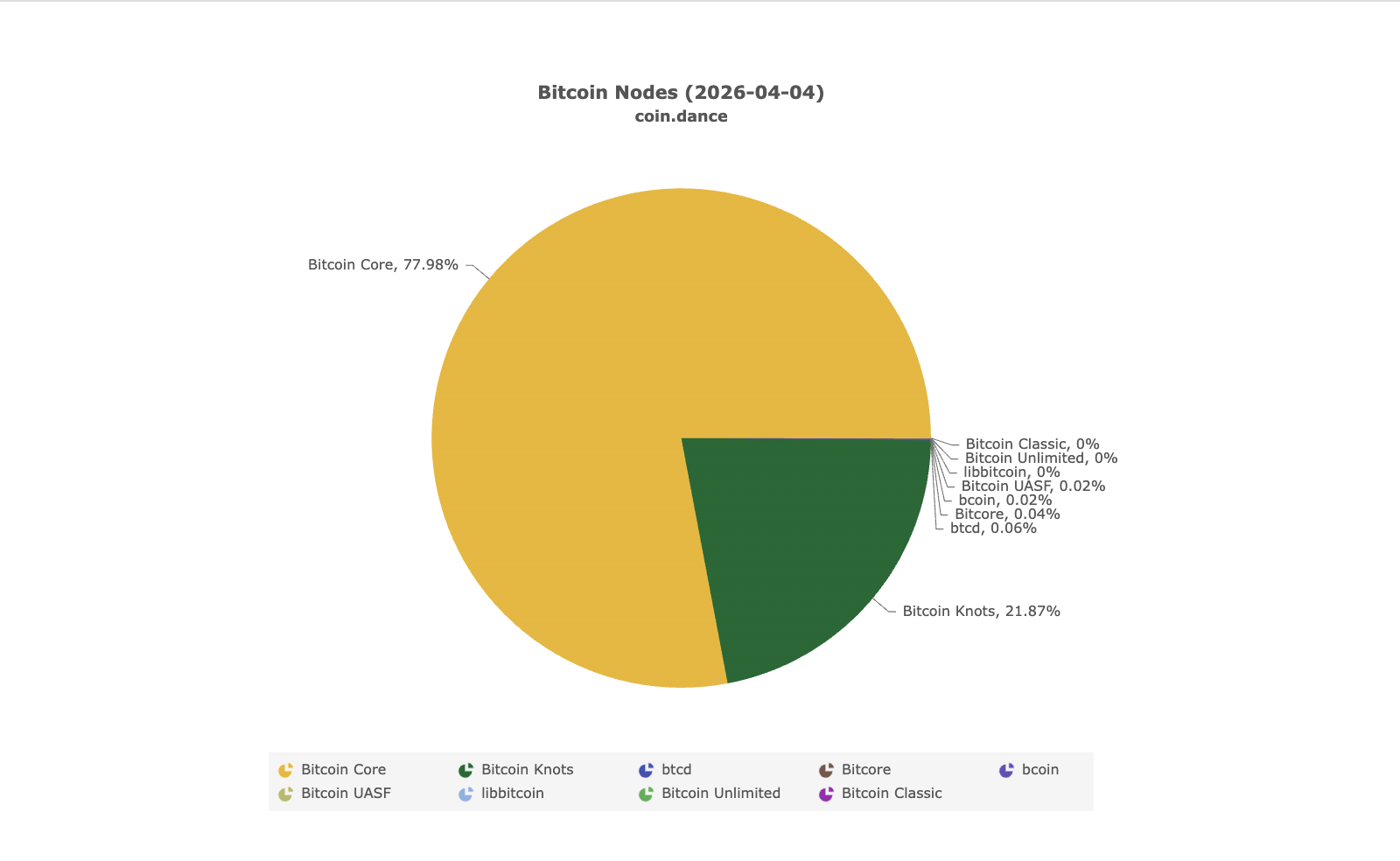
In the wake of the upgrade, the number of nodes running Bitcoin Knots surged to record highs, capturing over 21.7% of the total nodes distributed across the global network, according to aggregated data from Coin Dance.
This metric underscores a dramatic shift in node operator sentiment when compared to previous years. For historical context, only about 1% of the entire network was running the Knots software throughout 2024, prior to the initial public discussions and decisions surrounding the controversial removal of the traditional OP_Return function within the reference client.
 Ali Ikhwan
 Neng Nana
 Suro Senen