
 By Azzam Bilal Chamdy

The Bitcoin network requires a dedicated "conservative" client node software implementation to safeguard its core monetary properties and fortify its overarching network decentralization. That is the assessment of Jimmy Song, co-founder of ProductionReady, a non-profit organization dedicated to funding open-source Bitcoin node software development and educational initiatives.
In a recent discussion, Song explained that his organization maintains a clear and deliberate "bias" against introducing significant code changes to the network unless there is overwhelming support from the broader community. The underlying philosophy driving this approach is simple yet stringent, rooted in the foundational ethos of Bitcoin’s monetary design.
"The general principle is: if you’re not sure a change makes the money better, don’t make it," Song told Cointelegraph.

This conservative outlook has taken center stage amid ongoing debates regarding node storage requirements, network bloat, and governance models within the premier cryptocurrency ecosystem. ProductionReady expects to actively support initiatives aimed at preserving lightweight operational standards, including the restoration of the 83-byte OP_RETURN data limit for arbitrary, non-monetary information embedded within Bitcoin transactions. According to Song, keeping node storage costs manageable by restricting arbitrary data usage is absolutely essential for maintaining true network decentralization.
"The more self-sovereign Bitcoin users are, the more decentralized and resilient the network becomes," Song stated, emphasizing the direct correlation between hardware accessibility and network security. "That means keeping the cost of running a node low enough for ordinary people to do it."
As data footprints expand, the technical demands placed on node operators grow in tandem. When storage and bandwidth requirements increase significantly, fewer individuals are able to independently verify the blockchain for themselves. This dynamic inevitably pushes the network toward centralization by default. A conservative client, Song argues, takes this crucial tradeoff seriously, prioritizing censorship resistance and accessibility over feature bloat.
Maximizing the sheer number of active nodes and ensuring they remain easily accessible to the average user hardens the Bitcoin network against malicious activity. Lower barriers to entry dramatically reduce the probability of bad actors successfully cheating the system by submitting fraudulent transactions or orchestrating collusion among a small group of powerful entities to centralize network control.
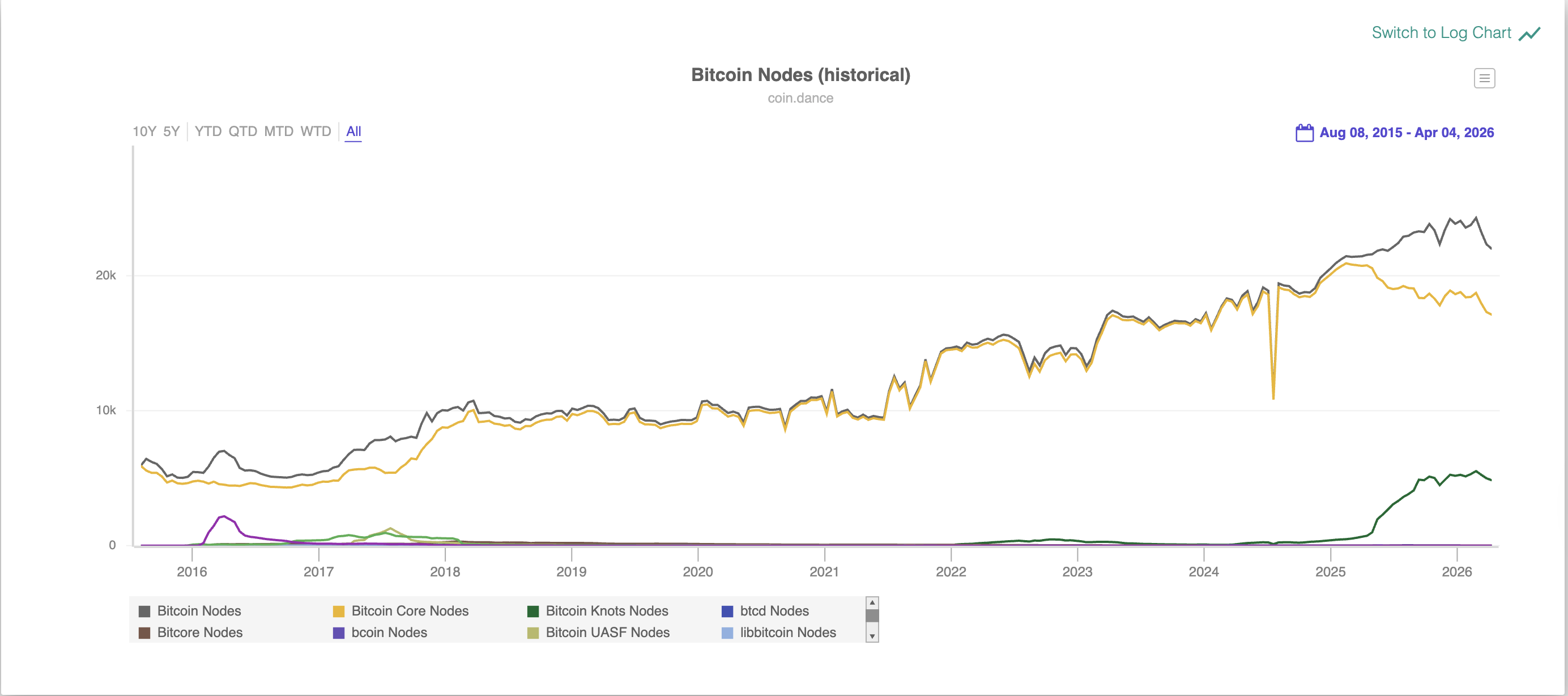
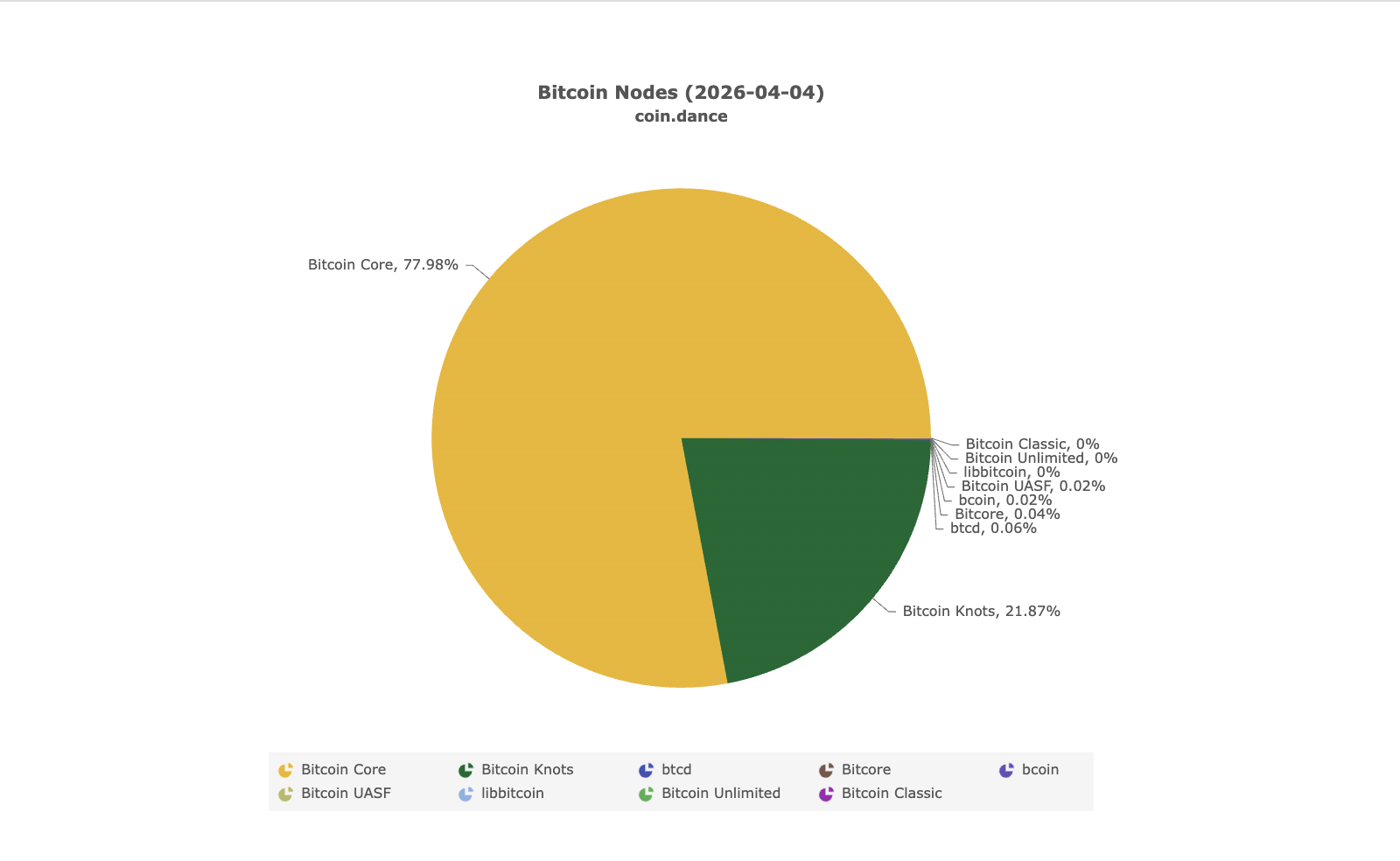
Despite the emergence of alternative software choices, Bitcoin Core continues to serve as the dominant software of choice for the vast majority of node runners across the globe. Historical data compiled by Coin Dance indicates that approximately 77.8% of the global network runs some iteration of the Core software, while 21.8% operates on alternative implementations such as Bitcoin Knots. However, this delicate consensus landscape has faced unprecedented friction following recent software updates that shifted long-standing operational parameters.
Bitcoin Core 30 Removes the OP_Return Data Limit, Sparking Major Pushback
Node storage capacity, blockchain bloat, and the prevention of on-chain spam transformed into explosive, high-profile topics across the cryptocurrency industry following a controversial move by developers in 2025. Bitcoin Core developers unilaterally altered the historical 83-byte data limit within Bitcoin Core version 30, marking a major upgrade to the reference implementation traditionally relied upon by node operators worldwide.
Despite substantial and vocal pushback from wide segments of the Bitcoin community, the long-standing data limit was dramatically expanded to 100,000 bytes. The magnitude of the community backlash was quantifiable; the formal proposal advocating for the limit change received roughly four times as many downvotes as it did upvotes on the proposal’s GitHub pull request page.
The release of Bitcoin Core version 30 in October 2025 served as a critical turning point, sparking a historic surge in the number of Bitcoin nodes migrating to or initiating Bitcoin Knots, an alternative implementation of the node client software that maintains stricter limits against arbitrary data insertion.
Prior to the formal announcement and subsequent implementation of the decision to remove the traditional OP_RETURN data restriction, only about 1% of the entire global network operated using the Knots software during 2024. Following the launch of version 30, that percentage climbed dramatically. Recent figures from Coin Dance illustrate the scale of this migration, recording 4,746 active Bitcoin Knots nodes, which now account for over 21.7% of all verified nodes operating across the global network.
 Ali Ikhwan
 Neng Nana
 Suro Senen