
 By Reynand Wu

The ongoing ideological and technical debate within the Bitcoin ecosystem over arbitrary data has reached a new milestone. The
number of Bitcoin nodes signaling active support for Bitcoin Improvement Proposal 110 (BIP-110)—a temporary soft fork designed to limit the amount of data included in each transaction at the consensus level—has climbed to 2.38%.
According to data compiled by The Bitcoin Portal, out of a total global network count of 24,481 tracked nodes, 583 are currently running BIP-110. The primary node software implementation facilitating the deployment of this soft fork proposal is Bitcoin Knots, a prominent alternative client implementation within the broader Bitcoin network architecture.

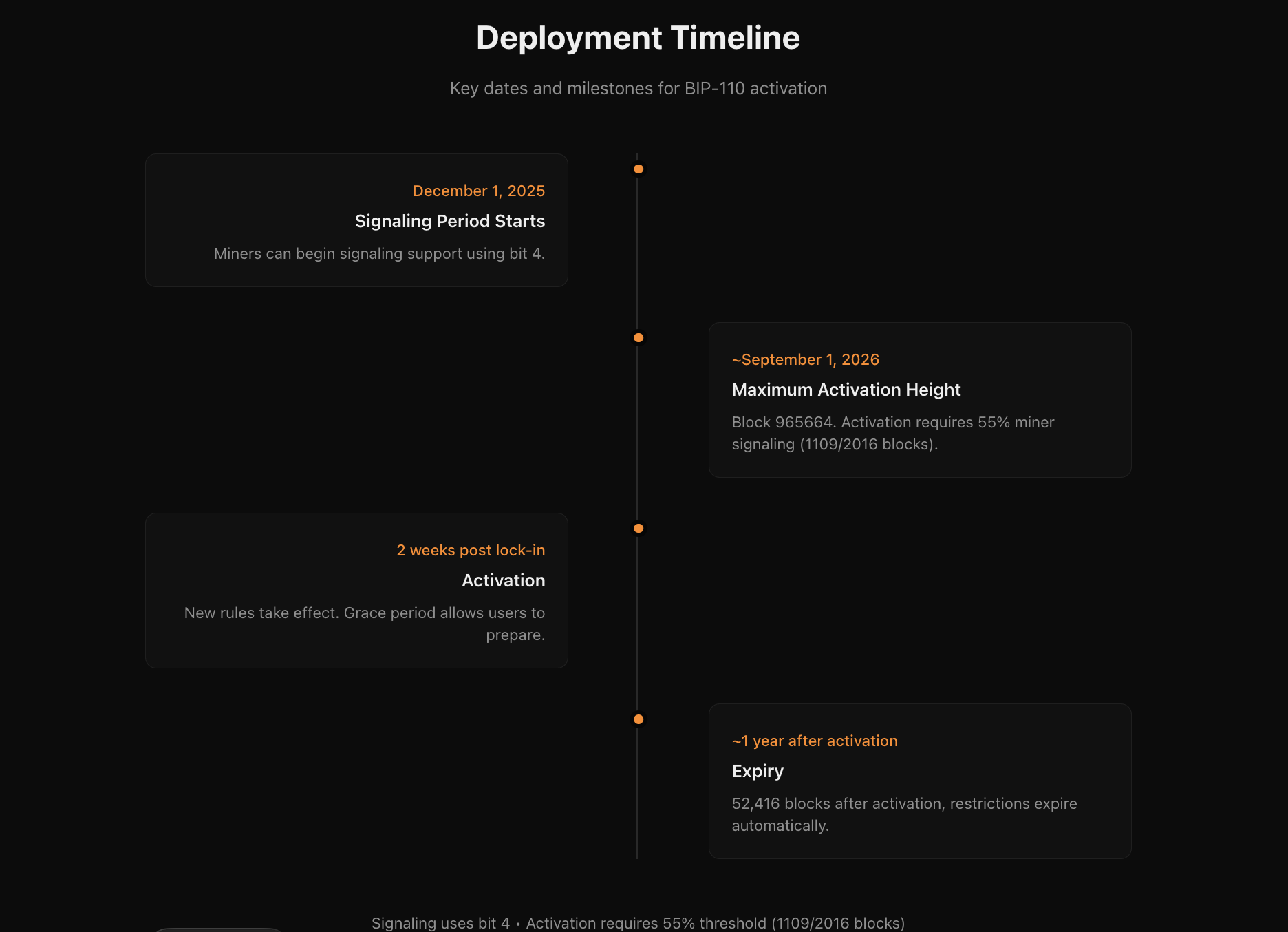
BIP-110 introduces specific parameter restrictions to curb excessive data bloating on the blockchain. The proposal limits the size of transaction outputs to 34 bytes and imposes a strict cap on the OP_RETURN data limit, restricting it to 83 bytes. According to the proposal’s documentation hosted on GitHub, this temporary soft fork is slated to be deployed for an initial duration of one year, with provisions allowing for potential extensions, modifications, or permanent alterations depending on how network conditions evolve over the 12-month term.
At the center of this controversy is OP_RETURN, a foundational script code designed to enable users to embed arbitrary data directly into the Bitcoin blockchain. While the feature has existed for years, it has recently become the subject of intense, often polarizing debate within the global Bitcoin community. This renewed friction follows the official release of Bitcoin Core version 30, the latest major upgrade of the most widely used Bitcoin node software implementation.
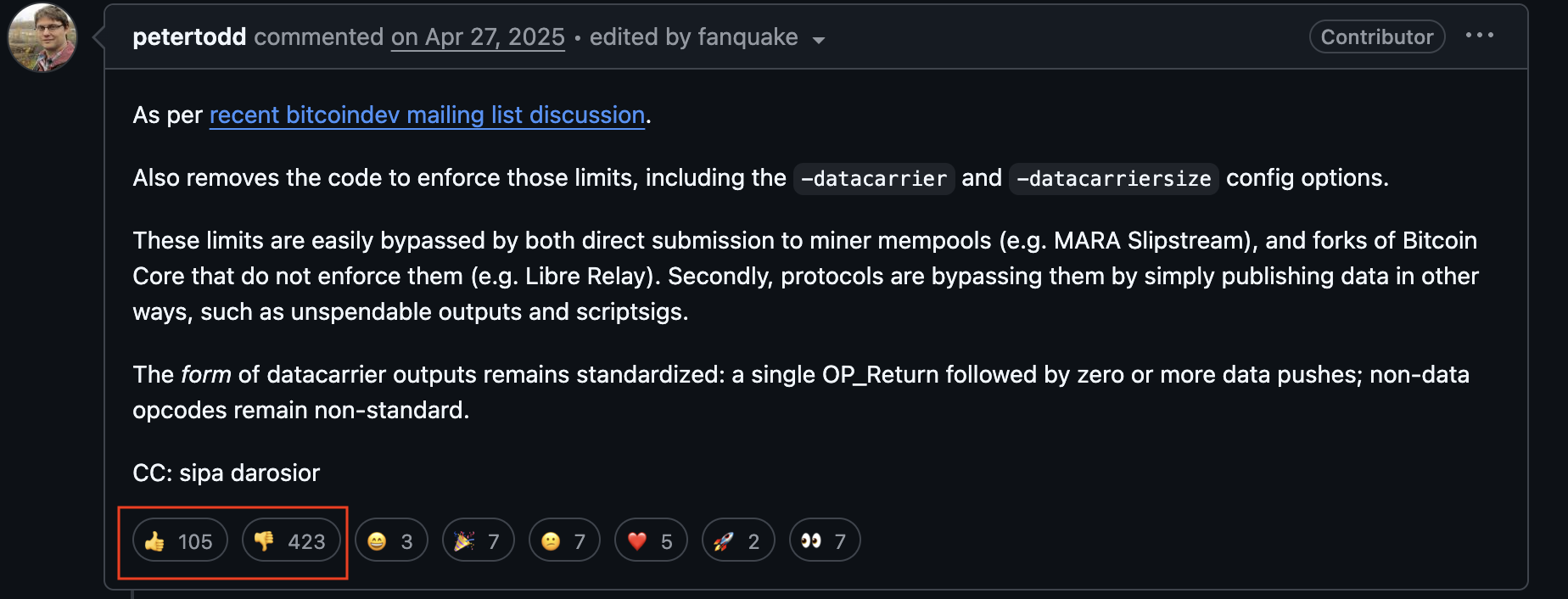
Historically, the OP_RETURN data limit was capped at 83 bytes to discourage users from permanently storing non-financial data on a monetary ledger. However, Bitcoin Core developers unilaterally removed this longstanding limit in version 30, following a controversial pull request that was first introduced and discussed in April 2025. Despite facing widespread opposition and pushback from various factions within the broader Bitcoin community during its development phase, the update moved forward and was integrated into the core software base.
The Arbitrary Data Issue Creates a Divide Within the Bitcoin Community
The release of Bitcoin Core version 30 in October 2025 marked a turning point, immediately triggering a torrent of negative feedback from critics, developers, and node operators. Detractors of the uncapped data limit argue that removing restrictions on arbitrary data creates economic and technical misalignments, effectively incentivizing spam on the Bitcoin ledger.
The inclusion of arbitrary, non-monetary data significantly increases the storage and bandwidth costs required for running a Bitcoin node. Because the viability of Bitcoin relies heavily on maintaining a decentralized network of independent verifiers, prohibitive hardware and storage costs directly threaten that decentralization. Unlike high-throughput alternative blockchains that generate massive quantities of data and consequently require specialized, high-performance data centers or server-grade hardware, Bitcoin has historically prided itself on being light enough to run on standard consumer-grade computers.
Critics argue that driving up node hardware requirements undermines the core value proposition of the Bitcoin protocol as a censorship-resistant, decentralized monetary network. Bitcoin advocate and educator Matthew Kratter expressed deep concern over the trajectory of network bloat during a recent public discussion, comparing the phenomenon to botanical parasites.
"It’s like one of those parasitical plants, like ivy, completely covering a tree, eating up the tree, and then the inner scaffolding collapses, and the ivy collapses because it’s basically destroyed the structure," Kratter said. "This is what spam has the potential to do to Bitcoin."
Conversely, other prominent figures within the development community hold opposing views regarding network filtering and data caps. Developers and contributors such as Jameson Lopp have defended the uncapped OP_RETURN limit, arguing that artificial software filters do very little to effectively stop or prevent users from embedding data if they are willing to pay the requisite transaction fees. Proponents of the upgrade suggest that market forces and fee dynamics are more appropriate mechanisms for managing network congestion than hard-coded protocol restrictions.
As the debate persists, the growing adoption of BIP-110 by nodes running Bitcoin Knots highlights a clear faction within the community willing to take proactive measures to enforce data limits at the consensus level. With 2.38% of the network currently signaling support and the one-year deployment timeline underway, the community continues to grapple with the delicate balance between protocol openness and the preservation of long-term decentralization.
 Nana Muazin
 Evan Lee Salim
 Ali Ikhwan